Active clay with a high plasticity index and dry autumn winds exceeding 30 miles per hour dictate how we compact bases and time every pattern impression.
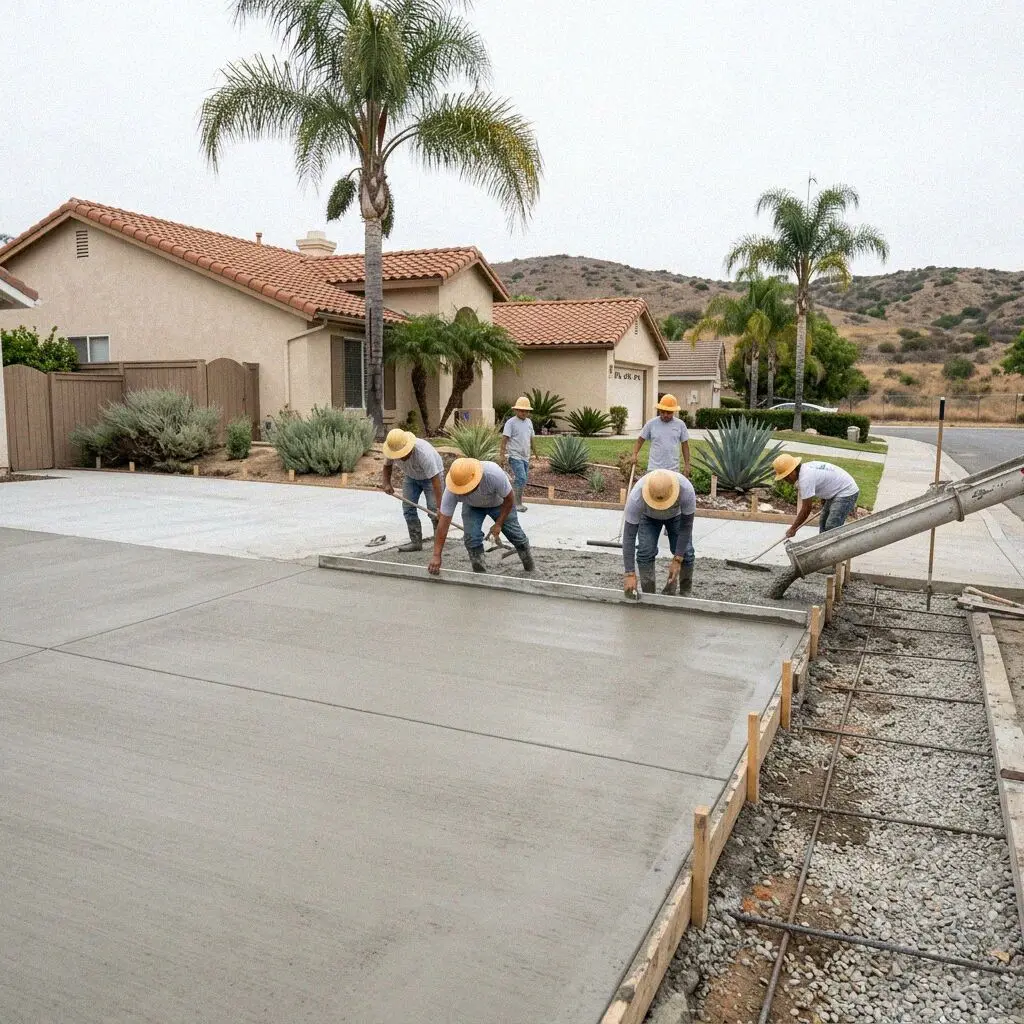
Across Irvine, where owner-occupied homes account for 48.2% of the housing stock, homeowners expect outdoor living additions to remain crack free across years of severe ground movement. The clay subsoils typical of our valley basin absorb irrigation water during hot summer months and swell substantially, only to dry out and shrink during winter dry spells. Without a properly compacted four-inch crushed aggregate foundation, this cycle exerts intense pressure under decorative slabs.
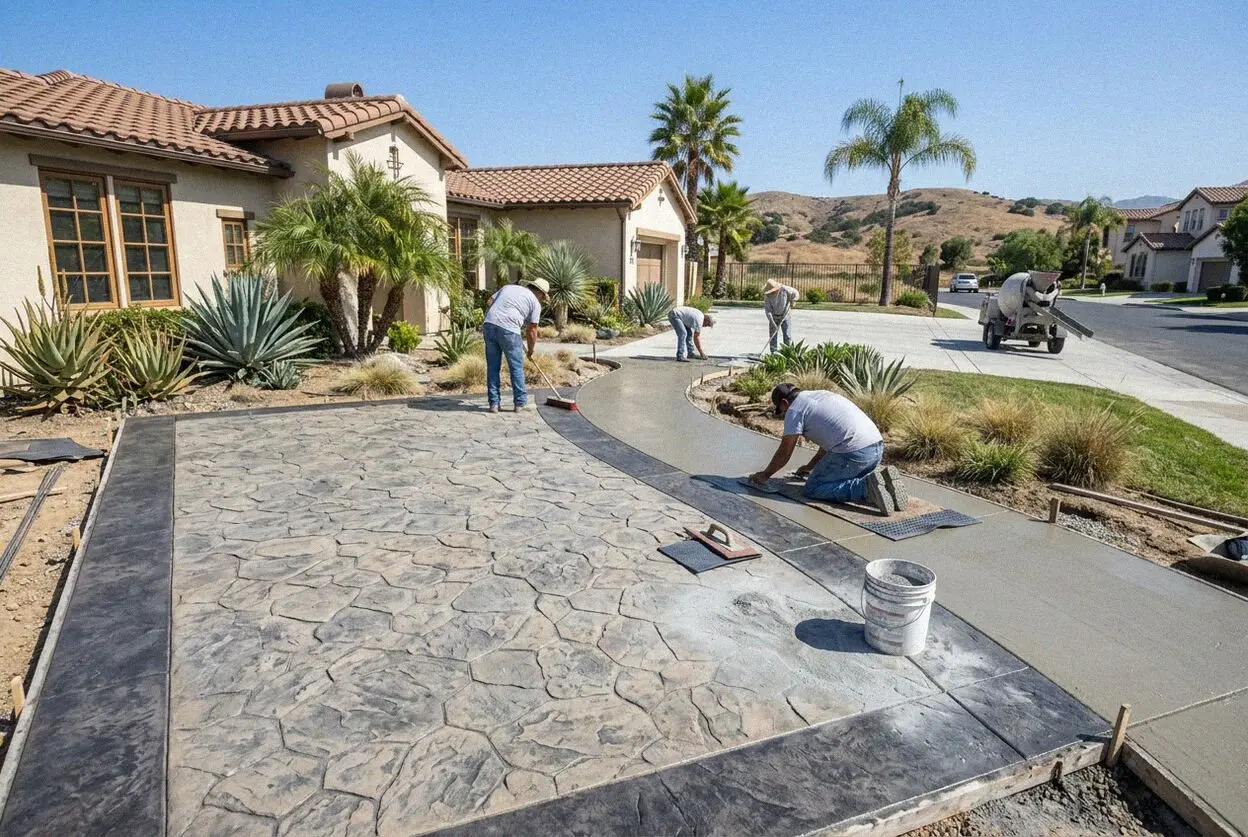
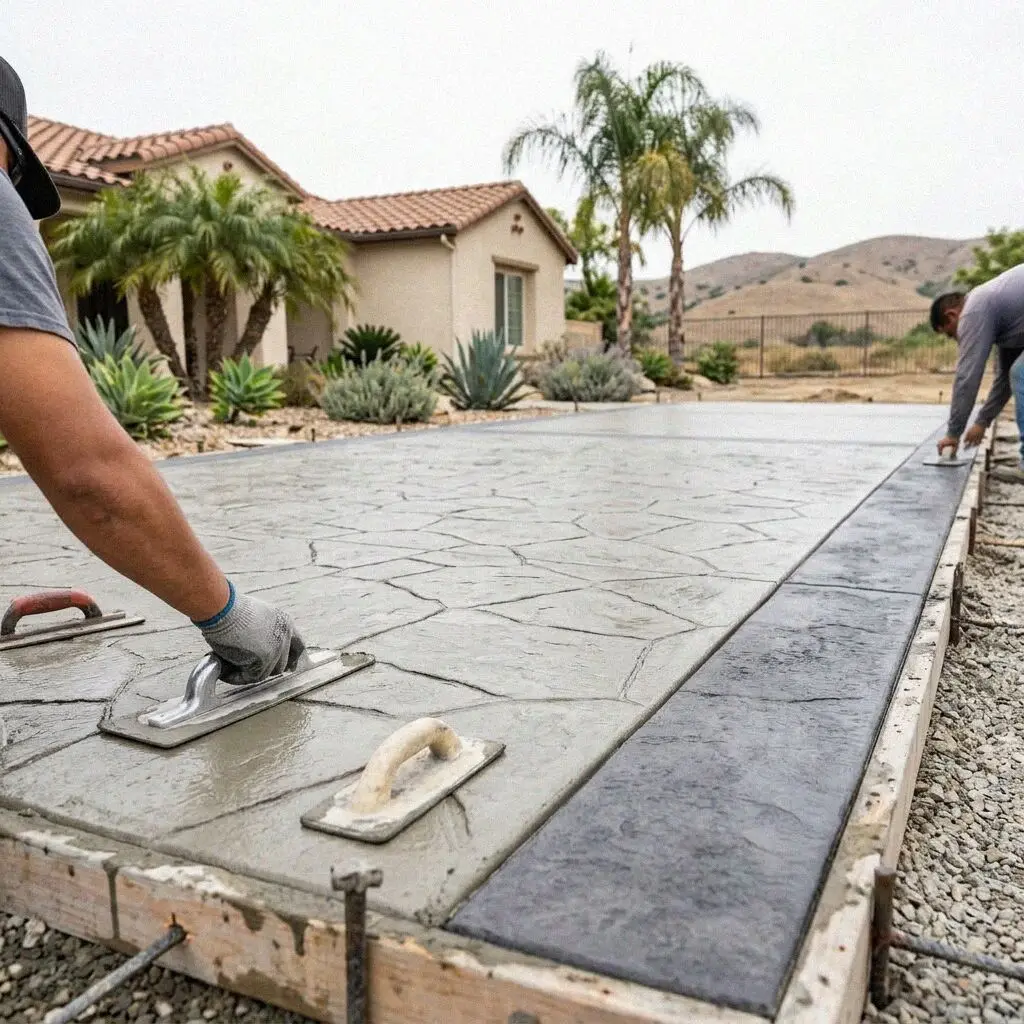
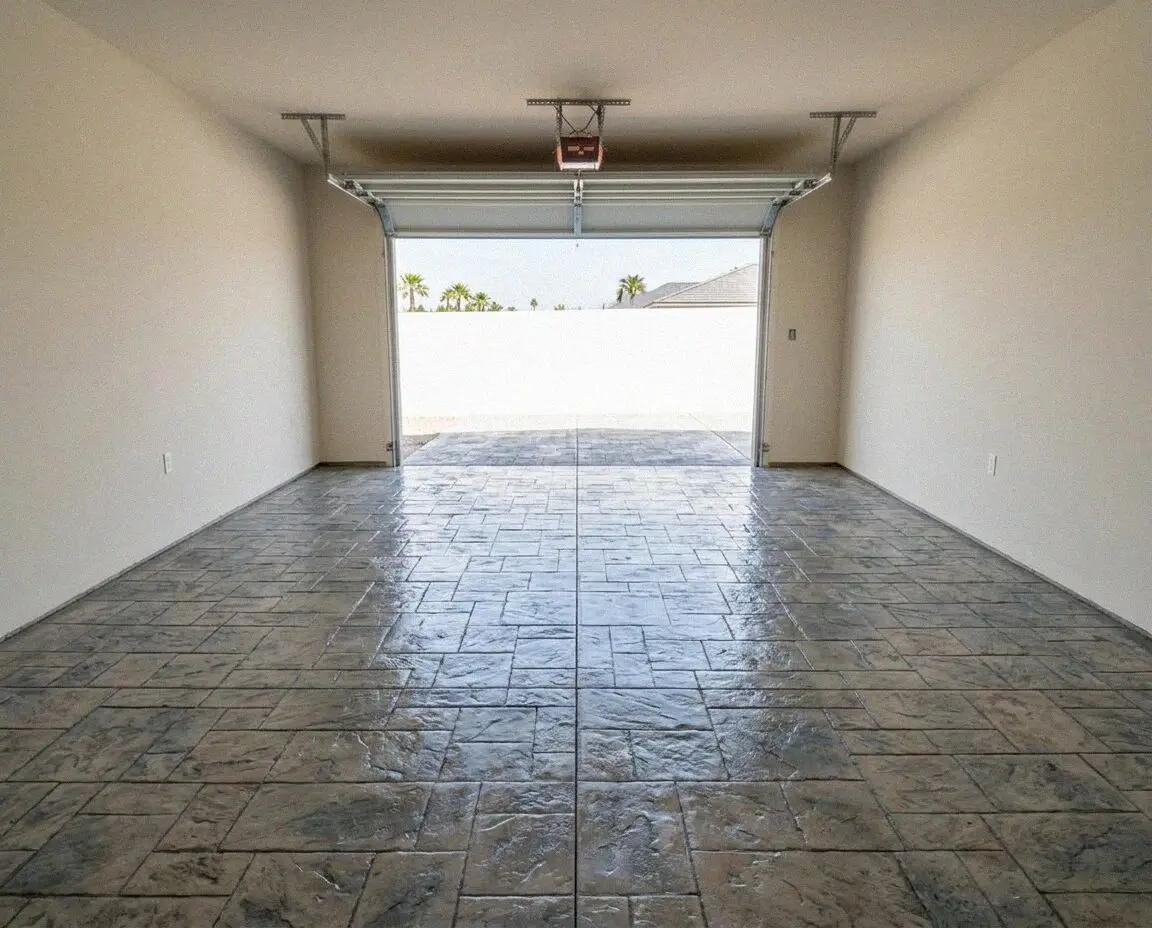
The City of Irvine sets clear guidelines for residential flatwork, while local village associations enforce strict drainage boundaries and aesthetic parameters. Stamping requires placing heavy rubber texture mats into fresh concrete while it is plastic, yet firm enough to hold pattern depth. If the pour is timed poorly against dry Santa Ana winds, surface crusting causes spider cracking. We control hydration to protect structural strength.