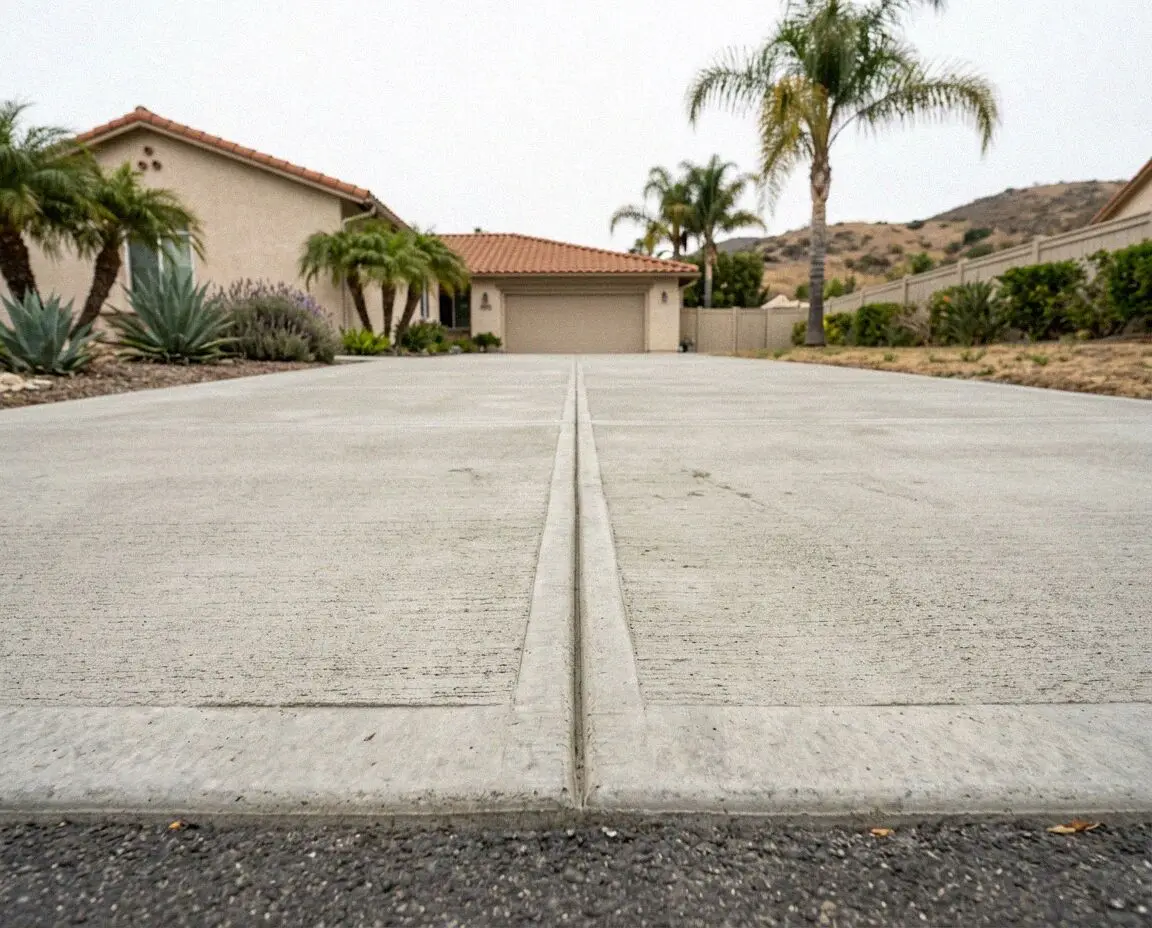
Concrete Driveway Building
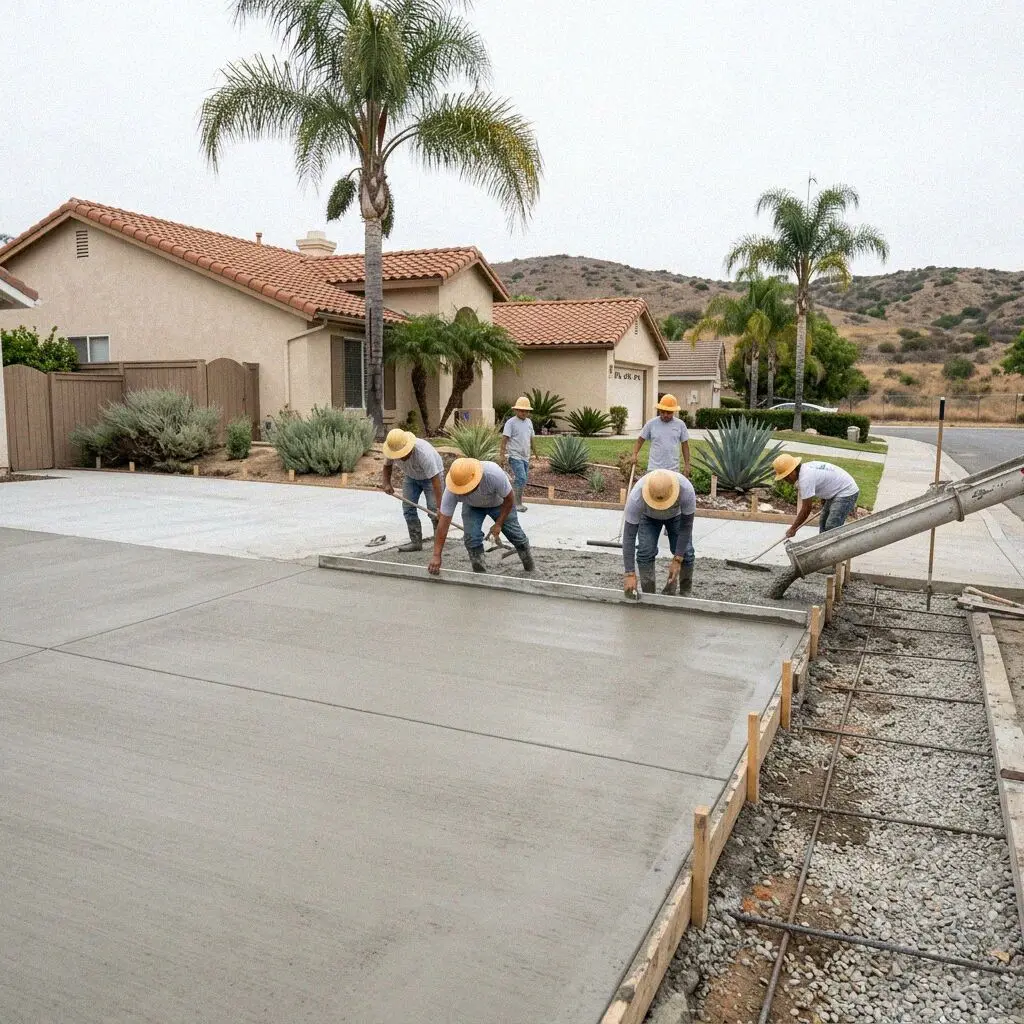
Cracking on Irvine clay? We excavate and pour five-inch concrete driveways over four inches of compacted base rock with steel rebar grids.

Driveways, patios, pool decks and walls, poured on the clay the Irvine Ranch left behind and finished to the color your village approved. Nothing is booked until the work has been measured at your property.


 5.0 Rated by our customers · Google, Facebook and the BBB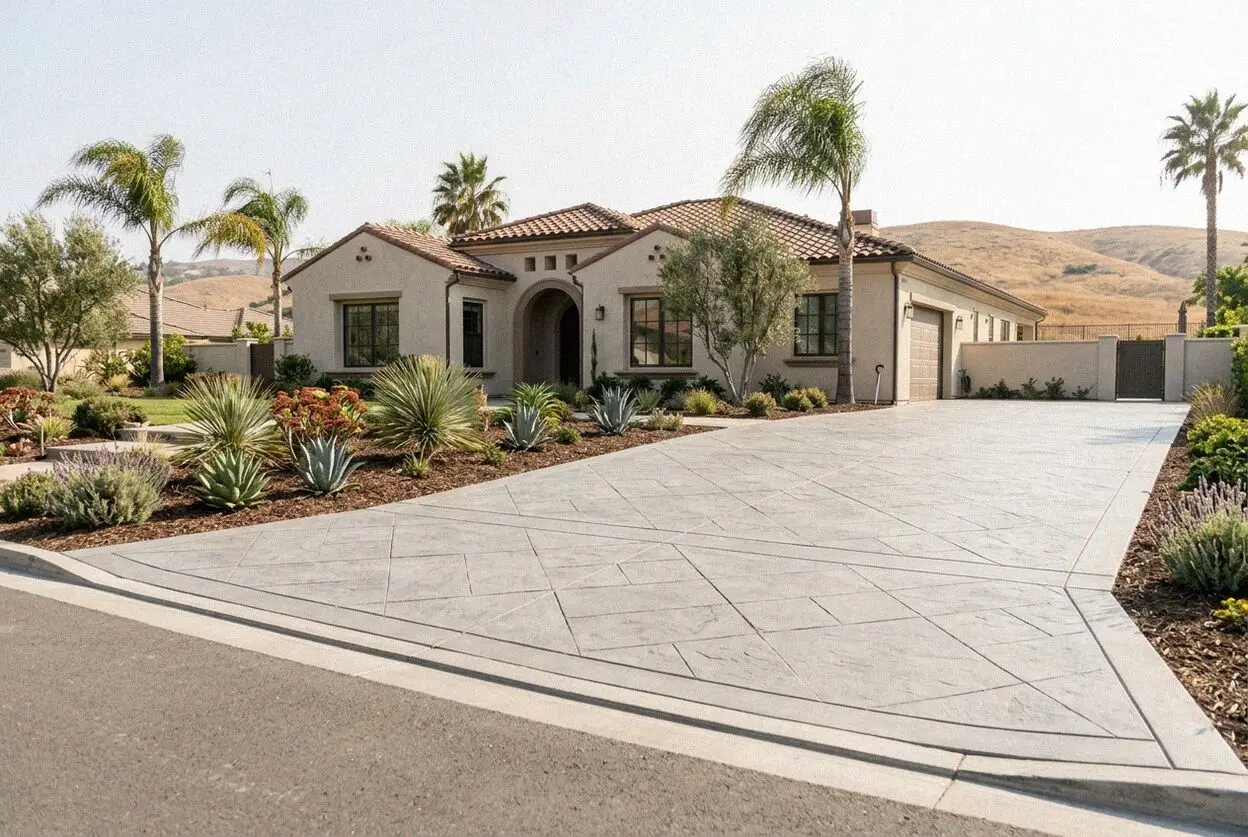
Barranca Irvine Concrete pours across every village on the old ranch - University Park and Turtle Rock now past fifty, Portola Springs and Eastwood only twenty. A driveway taken back to subgrade, a pool surround matched to an approved color, a wall holding a San Joaquin Hills grade: every one built to California code and to whatever the association put in writing.
Cracking on Irvine clay? We excavate and pour five-inch concrete driveways over four inches of compacted base rock with steel rebar grids.
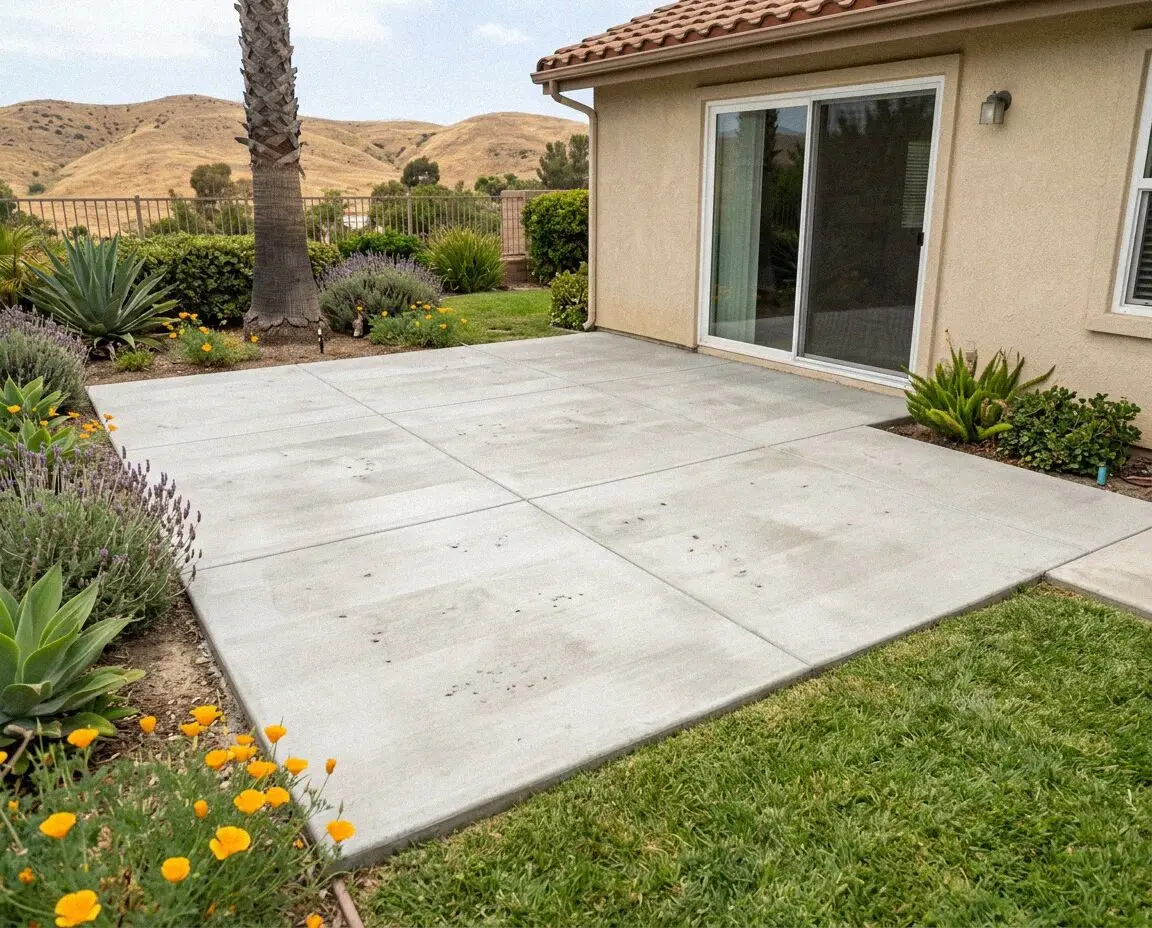
Does local clay soil crack your outdoor patio? We cast thick reinforced concrete slabs over four inches of compacted crushed stone base.
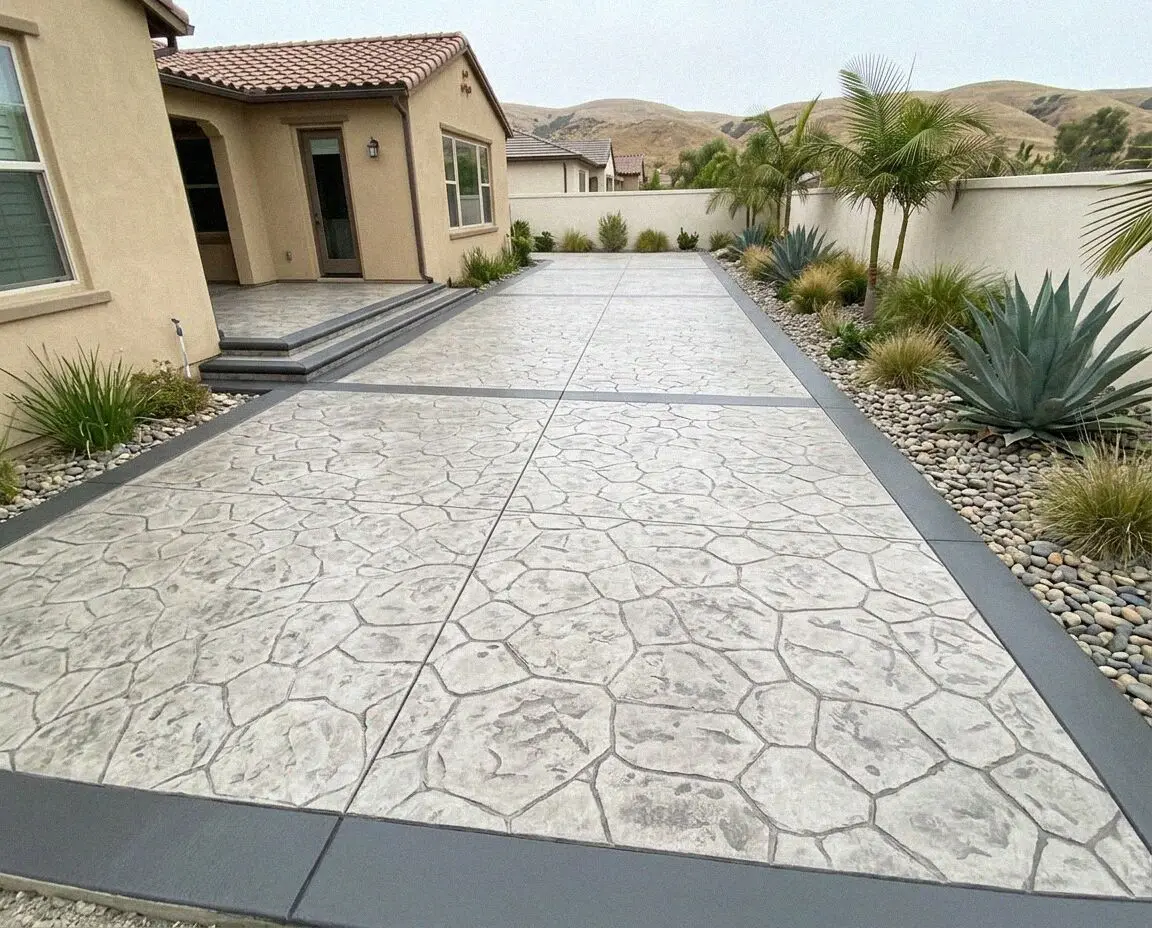
Will expansive soil crack your textured patio? We pour 4000 PSI mixes over four inches of crushed rock with joints matched to your pattern.
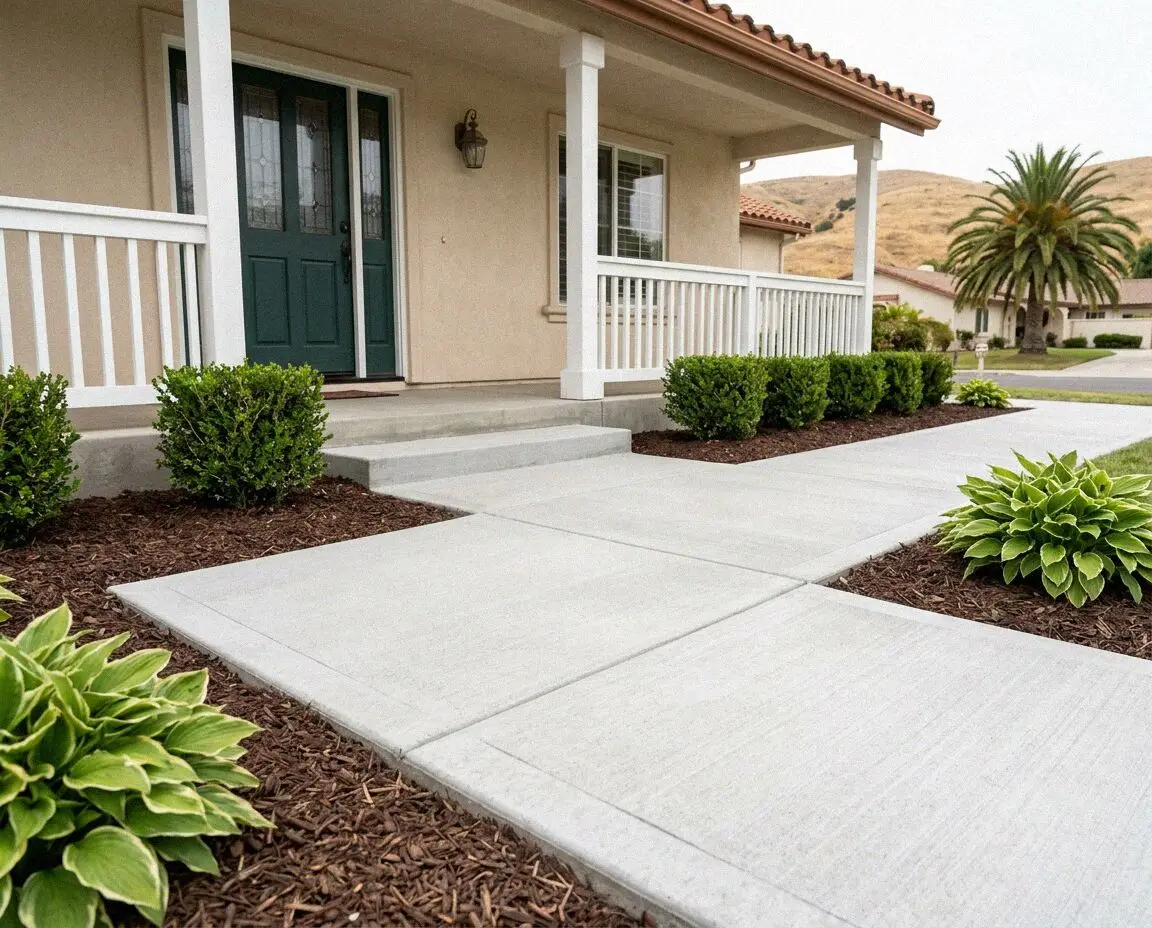
Are shifting clay panels tripping Irvine walkers? We pour four-inch slabs over four inches of crushed base with tied steel reinforcement.
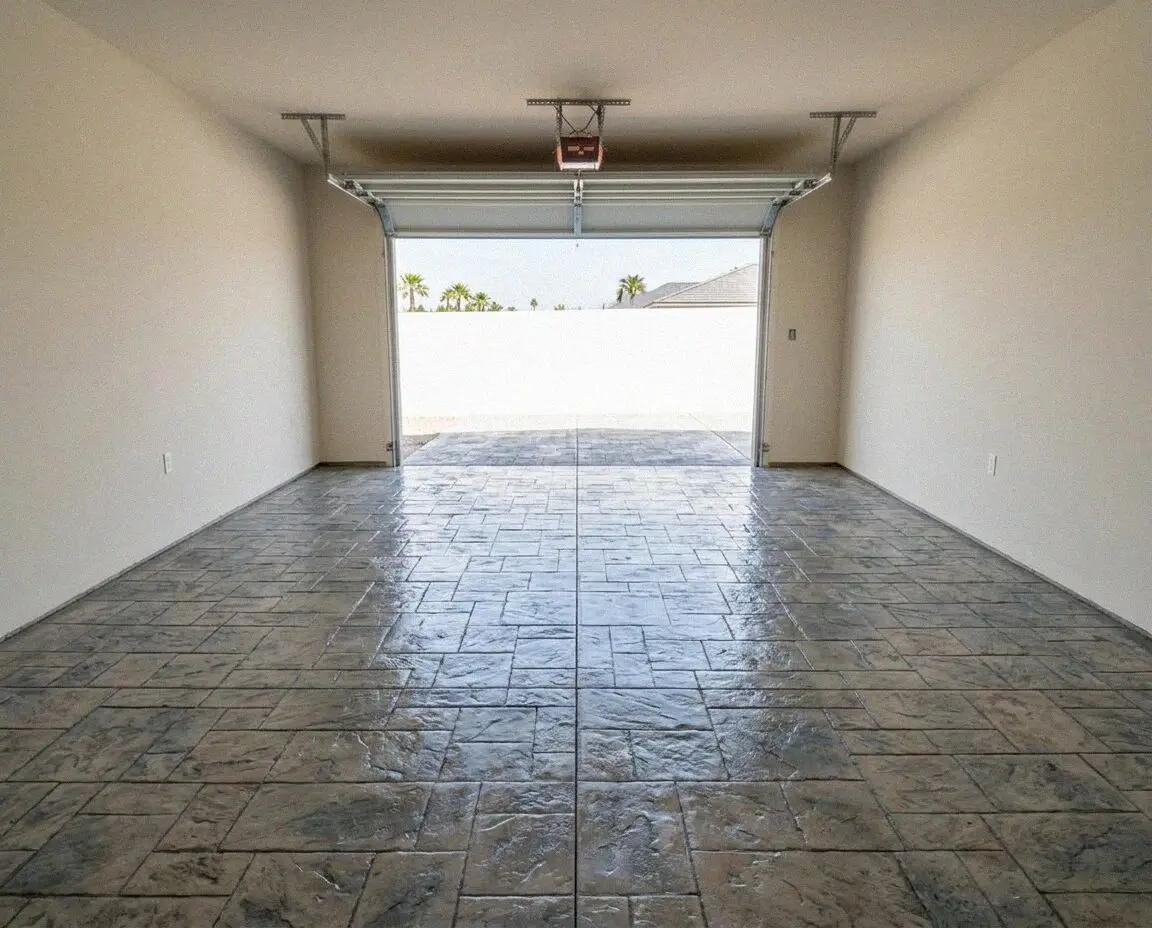
Does your garage slab crack as clay swells? We pour four inch slabs with four thousand PSI mixes and ten mil moisture retarders in Irvine.
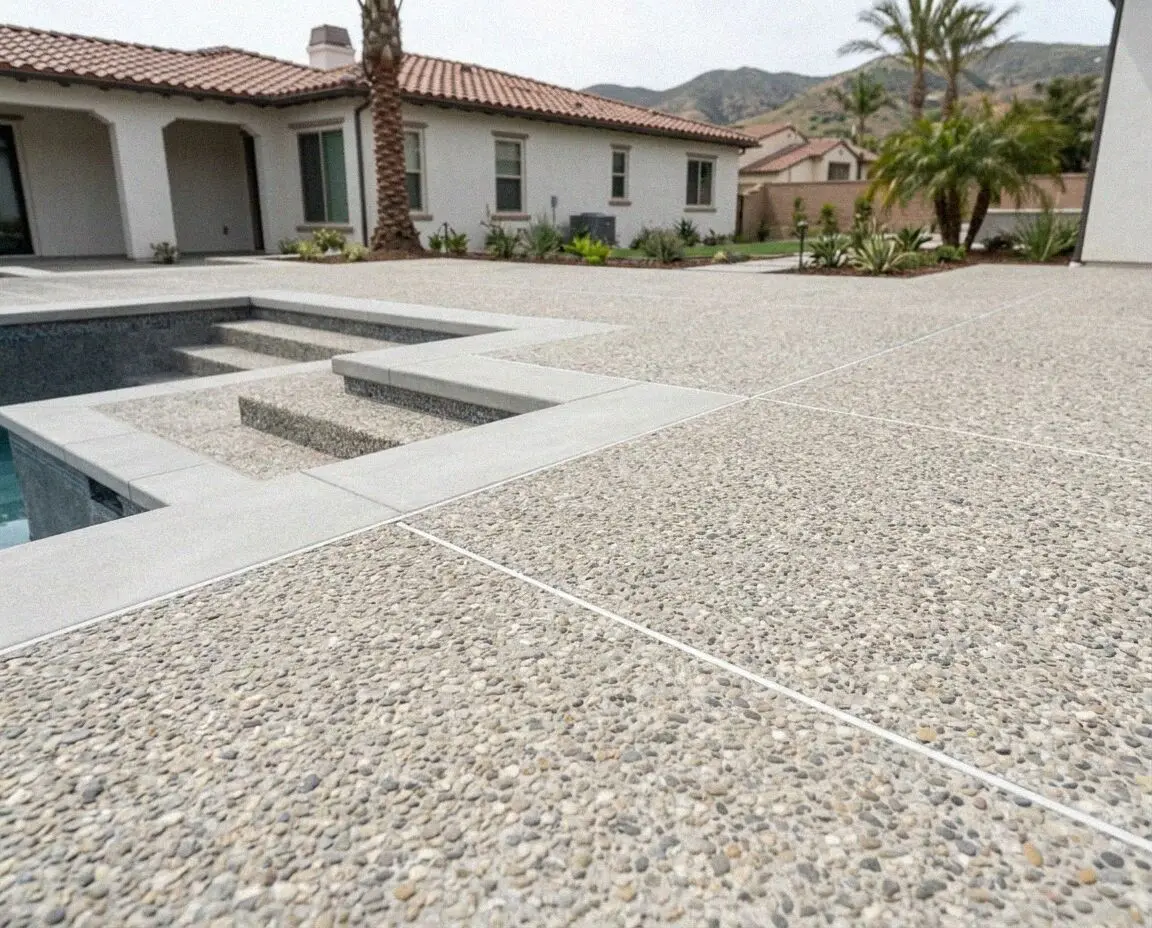
Will expansive clay crack a decorative pour? We pour four inch slabs with number three rebar grids and integral color cured to 4000 PSI.
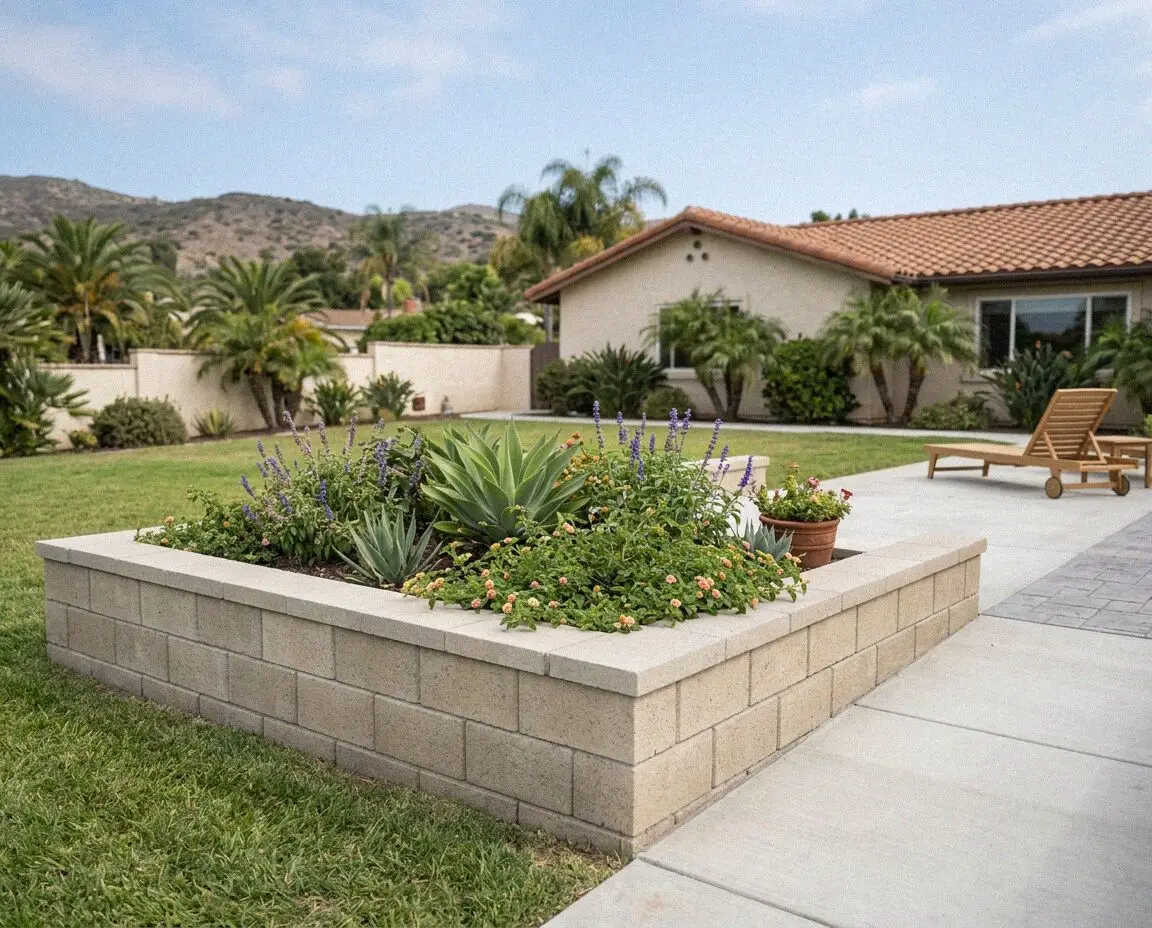
Is your slope shifting Irvine soil? We pour retaining walls with 12 inch reinforced stems and steel footings anchored into native ground.
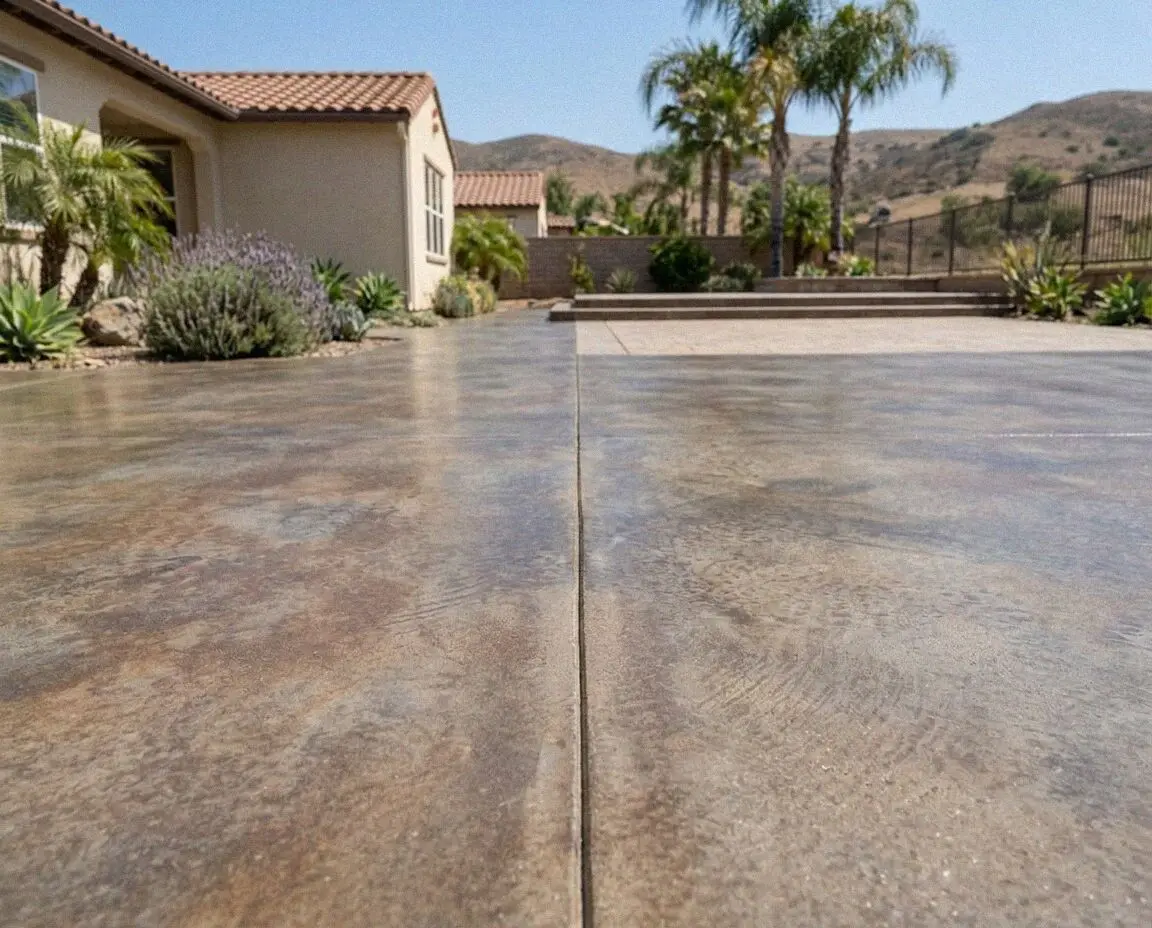
Worried about damp clay heaving your slab? We place four inch interior concrete over a ten mil barrier and four inches of crushed rock base.
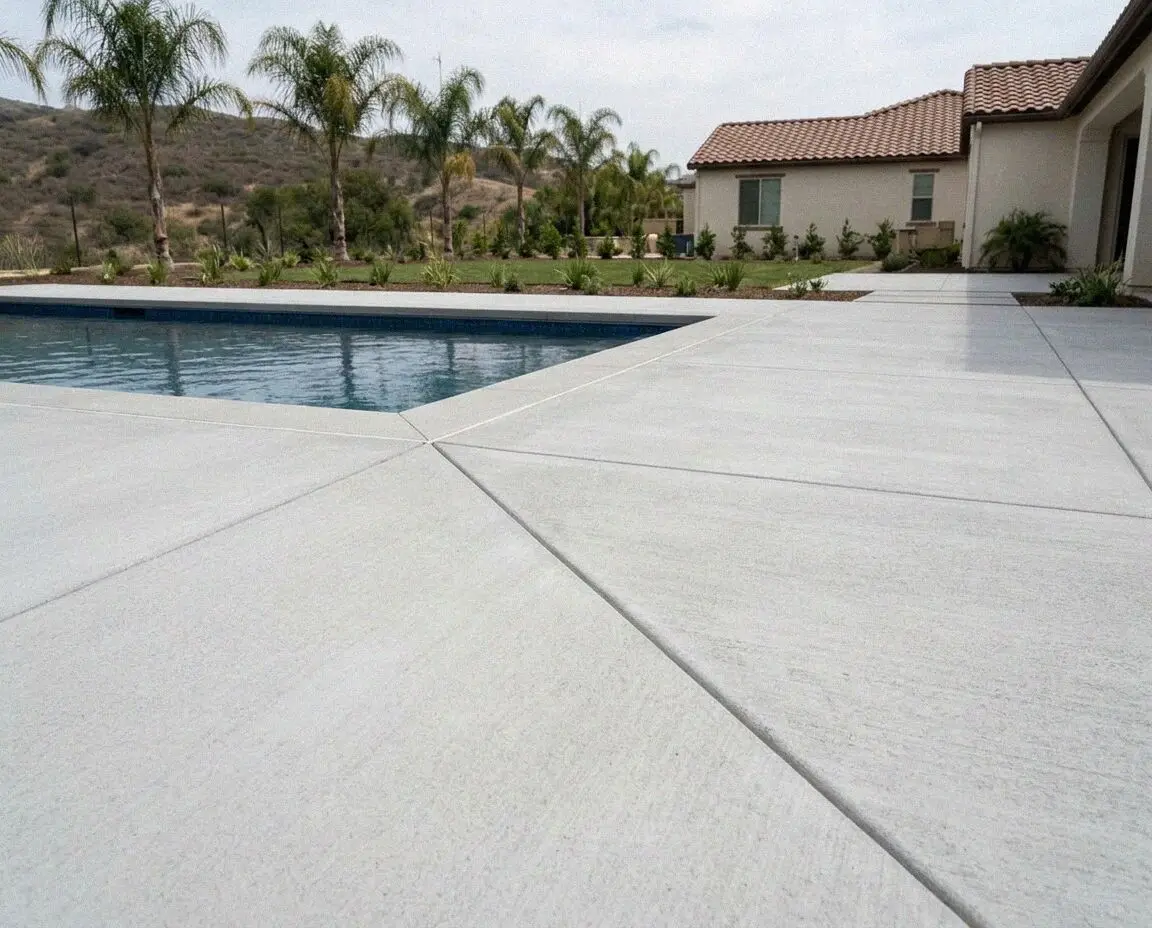
Cracking around your pool coping? We pour four-inch slabs over compacted base rock with separate perimeter expansion joints to protect it.
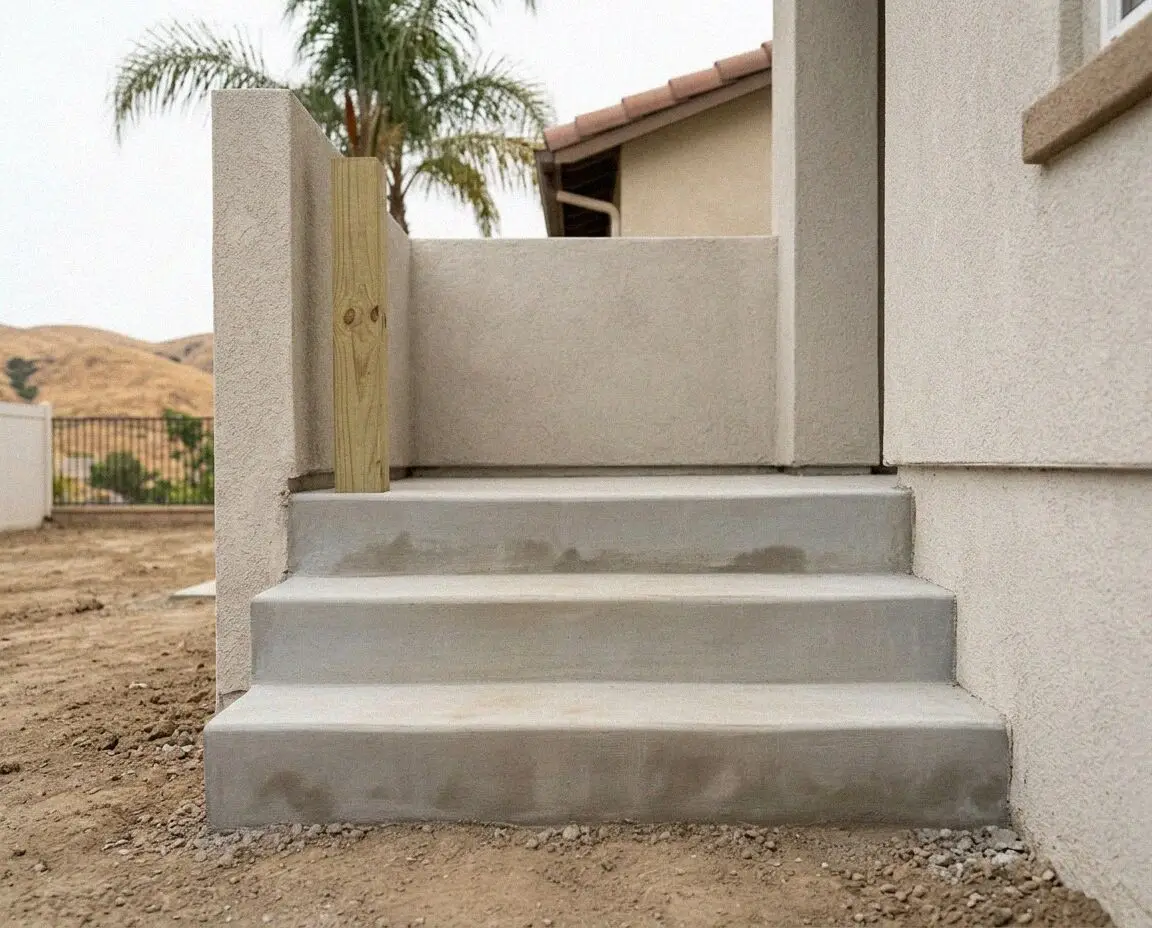
Are steps pulling away from the wall? We pour 4000 PSI concrete over compacted crushed rock with steel rebar placed on 12 inch centers.
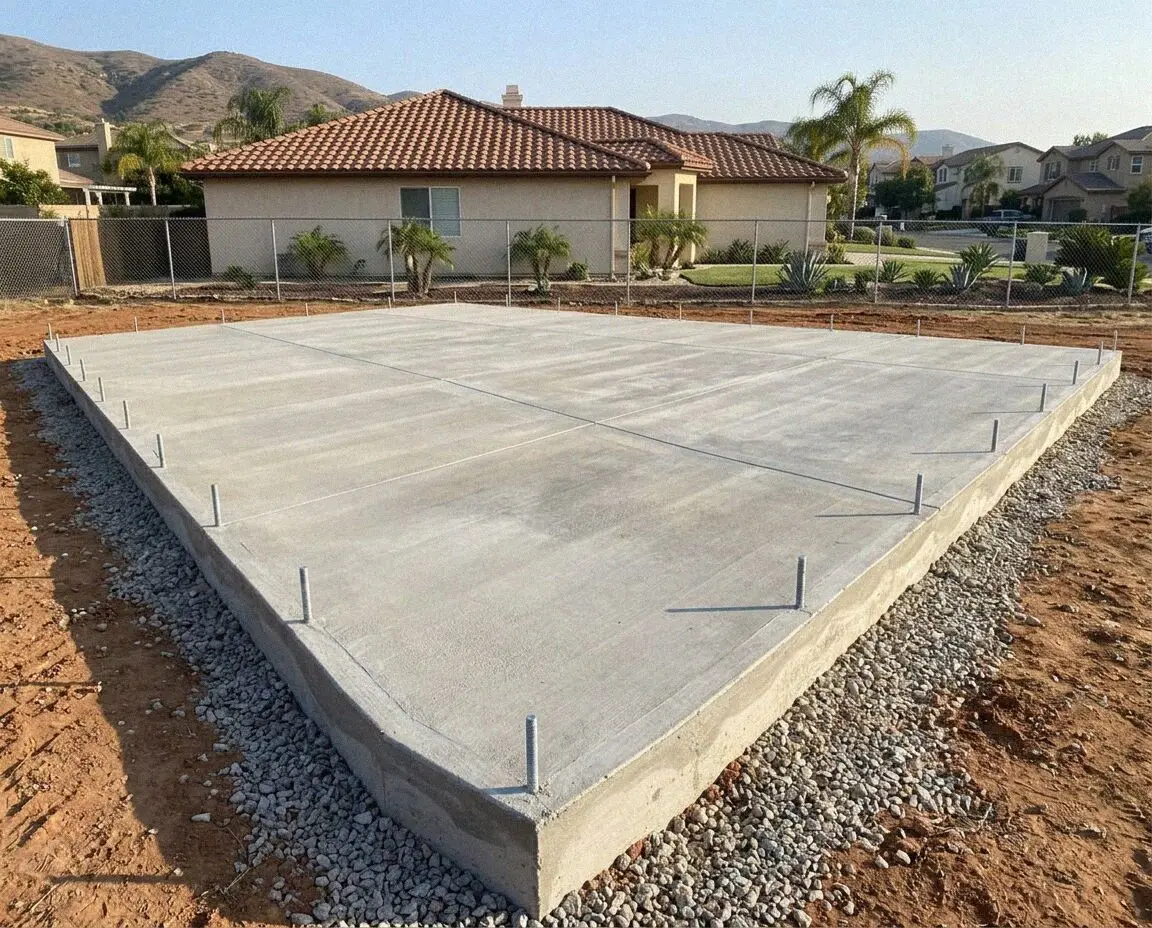
Struggling with shifting clay under your pad? We pour structural slabs with twelve inch footings and four inch crushed rock subgrades.
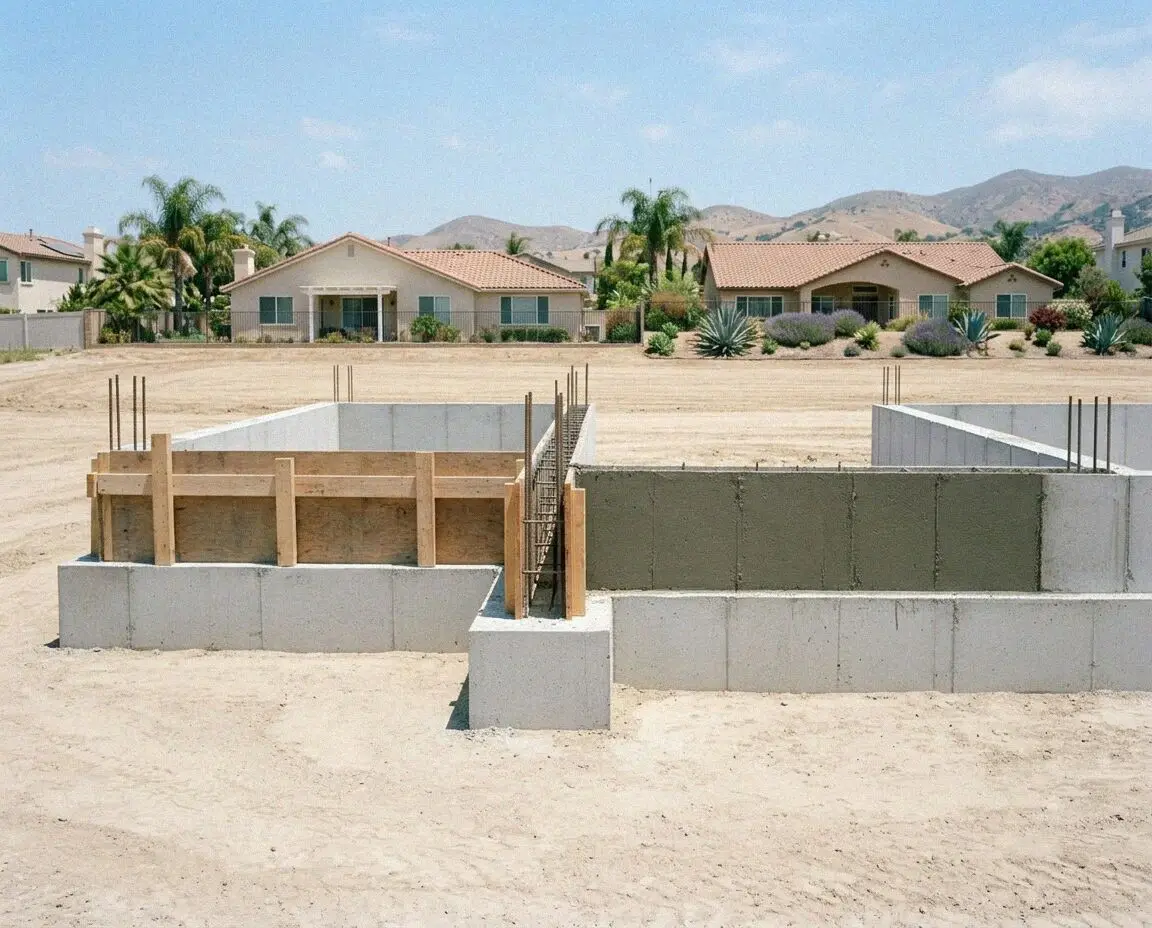
Worried about shifting Irvine clay? We excavate continuous footings 24 inches deep with steel rebar grids and 3000 PSI concrete pours.
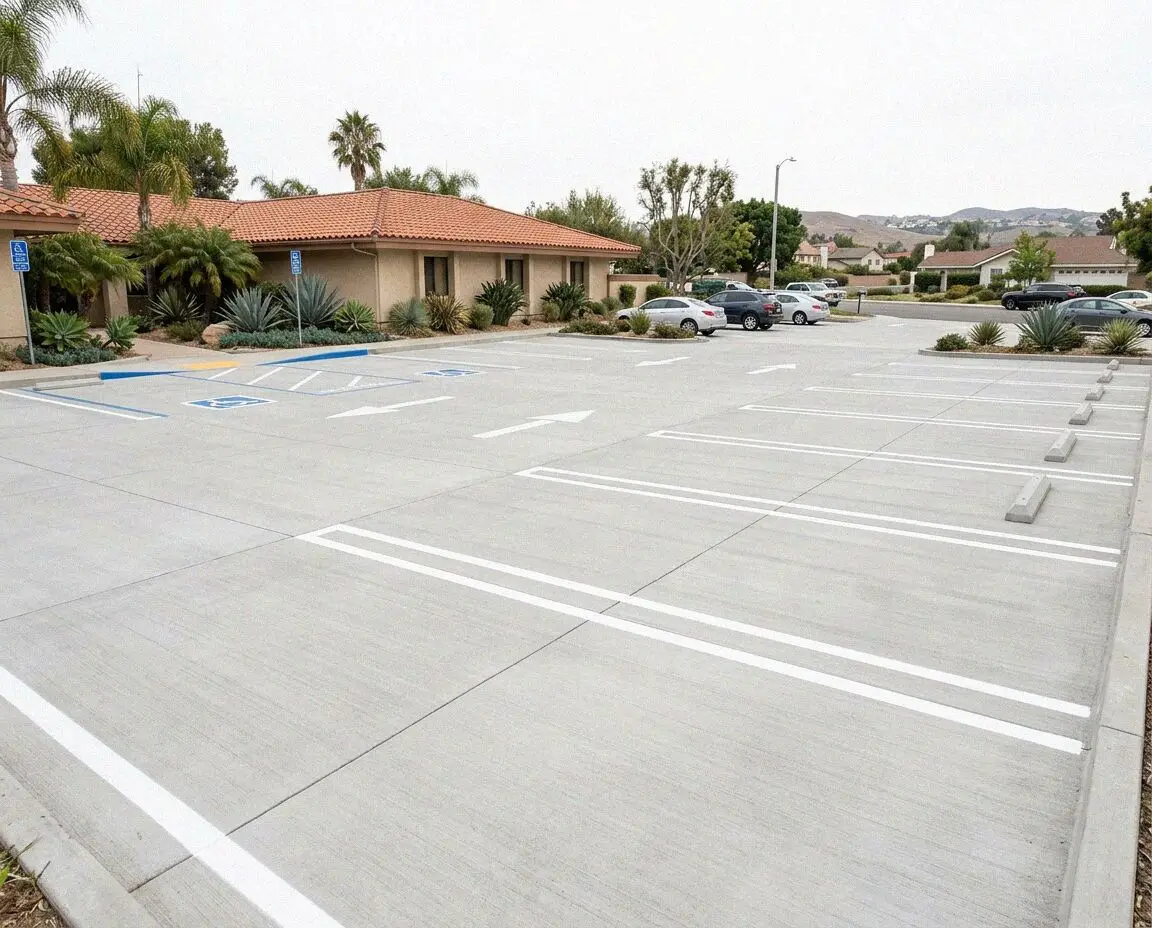
Pavement cracking under truck traffic? We build 6-inch reinforced slabs over 4 inches of crushed rock base to stop joint shear in Irvine.
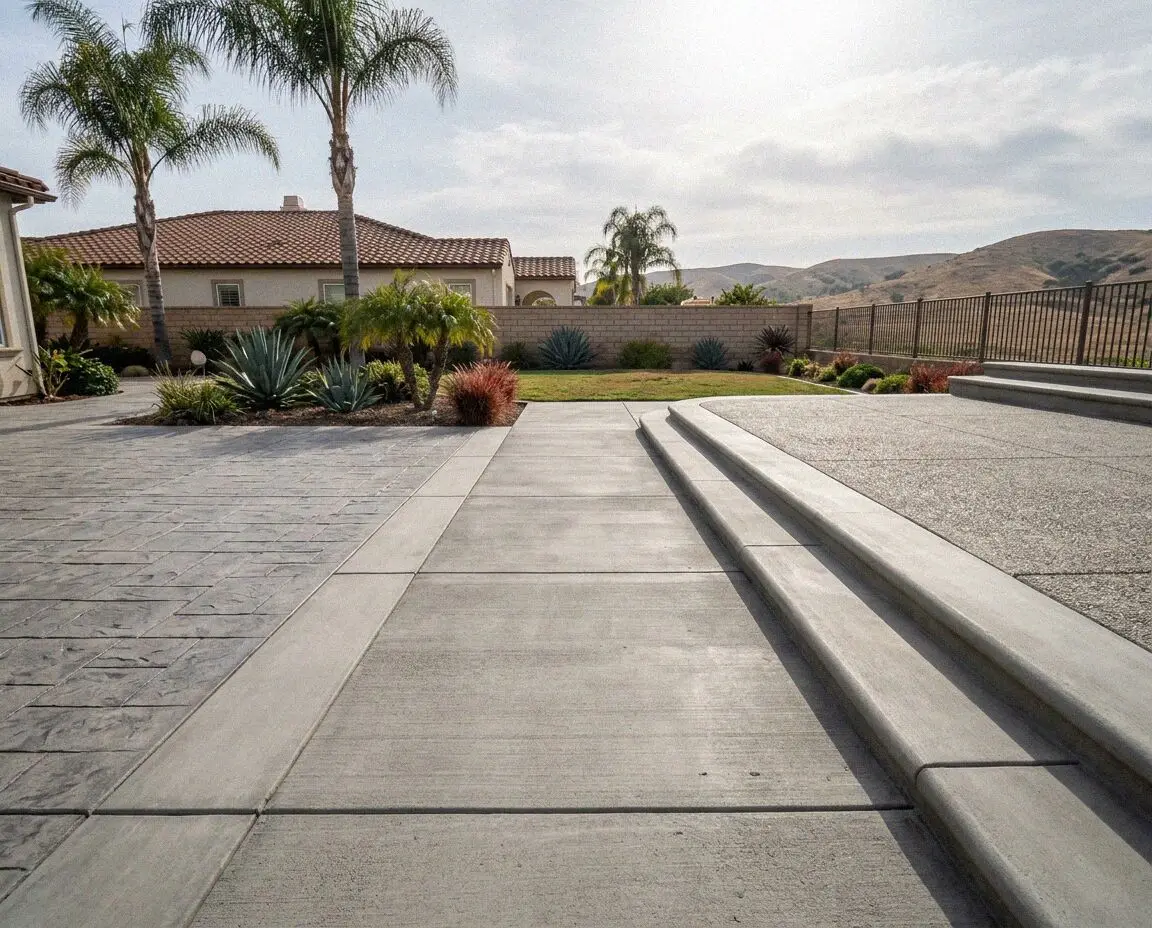
Worried about clay soil shifting under your build? We excavate footings down to 24 inches with rebar grids tied to hold true under load.
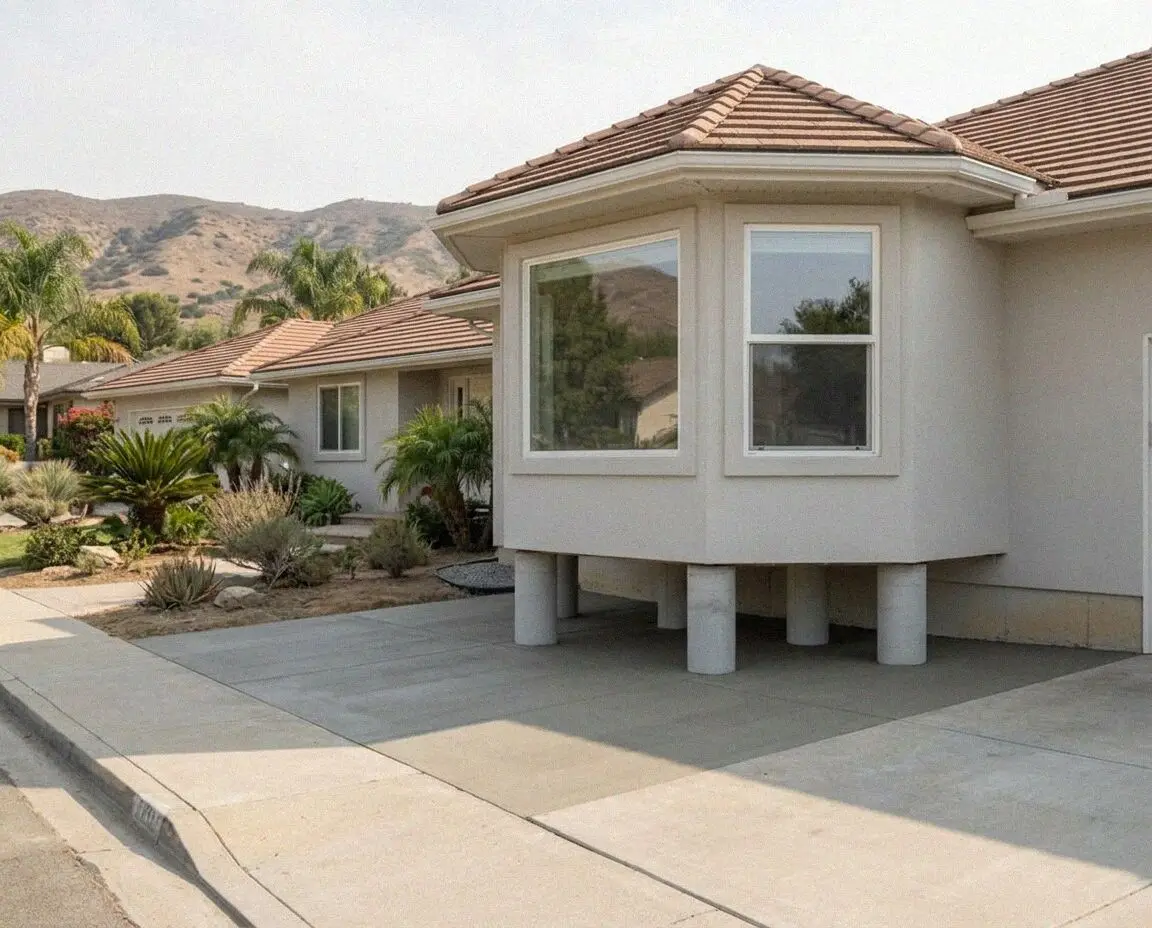
Is foundation settlement tilting your slab? We drive steel push piers 25 feet into stable ground to lift and lock concrete permanently.
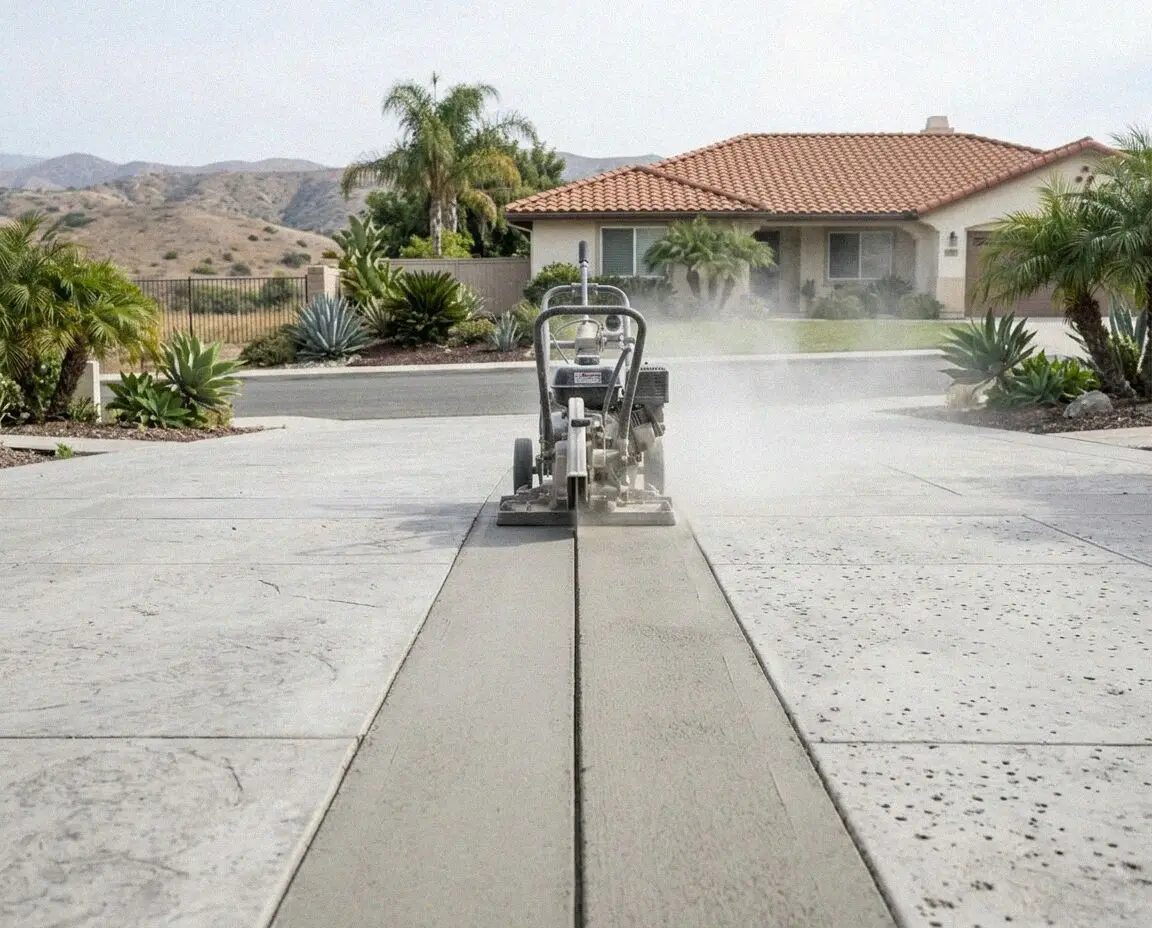
Need clean utility trenching through an Irvine slab? Diamond wet cutting penetrates up to 8 inches deep without cracking adjacent concrete.
Four steps carry the job from your first phone call through to a slab you can stand on. Nathan Pham writes the number himself at step two and works the deck at step three.
Phone the office or leave the form. The reply comes within 1 business day and the free measure goes in the book for a slot that same week.
We open the subgrade, read where water sits and note the finish your village allows, then price demolition, base, pour and cleanup apart.
The association submittal and any city permit go in first. Once both are back we set a date: strip out, base, forms, pour, finish.
We clear up, then go round the finished slab beside your estimate - depth, base, joint lines, color - and close the job once you agree.
C-8 Concrete is the classification, held with the California Contractors State License Board, and our name alone is enough to look it up before anyone parks on your lot. liability insurance on every job puts the truck on the apron and the saw over the deck on our account, not yours.
Most Irvine lots sit under a village association that has to approve a color and a finish before a form goes down. We make the sample panel, fill the application in and wait for the written decision, so the pour is booked against an approval rather than a hope.
The visit costs nothing. On clay the first reading taken is how the lot drains, because water held against a slab is what lifts it here. Demolition, subgrade, base, pour, finish and haul-away are then each written as their own line, so nothing arrives later as an extra.
Every job leaves with a written workmanship guarantee against defects in how it was built. Here the call-back is nearly always a slab poured on clay nobody conditioned, and that one is ours. Wear and seasonal heave past what the joints allow are not.
Not sure where to start? (949) 555-0186 or send us a message.
Customer Reviews
Three jobs from the past two years, told by the people who paid the invoices: a drive in Westpark, a pool surround above Turtle Rock, and a run of steps in Woodbury.
“Our Westpark drive had lifted at the garage lip and you could catch a toe on it. They took out 480 square feet, wet the clay down and rolled it before any base went in, and poured four inches. Nathan cut the joints the same evening. Two rainy seasons later the lip is still flat.”
“The association would not look at our pool deck until they had a physical sample of the color and the broom direction. Barranca made the panel up, sent the application in and waited on the letter rather than talking us into starting. 620 square feet went down after, and it matches.”
“Three steps down to our Woodbury side yard had pulled away from the house and the middle riser was rocking. They dug the footing deeper than the old one, tied it back and repoured all three. It was measured on a Tuesday and finished inside the week, and the figure did not move.”
About Barranca Concrete
Concrete is what Barranca Irvine Concrete does, and it is owned and run in Irvine, CA. Nathan Pham opened the business in 2020 after 15 years on central Orange County crews, and the work splits residential and commercial across 20 cities, all of them inside Orange County.
Irvine was incorporated on 28 December 1971 and built out village by village on the old Irvine Ranch, so almost nothing here is pre-war stock. What comes out instead is village concrete reaching its own age: University Park and Turtle Rock past fifty, Woodbridge in its forties, Portola Springs and Woodbury now twenty.
The C-8 Concrete classification is held with the California Contractors State License Board. We carry liability insurance on every job. City submittals go in online and one of us stands at the inspection rather than leaving you to meet it. Every estimate is measured and written on site.
How We Build
Nothing in the specification bends to the size of the job. Clay is moisture-conditioned before base goes over it, thickness follows what will park on the slab, and no pour is left overnight without its joints cut.
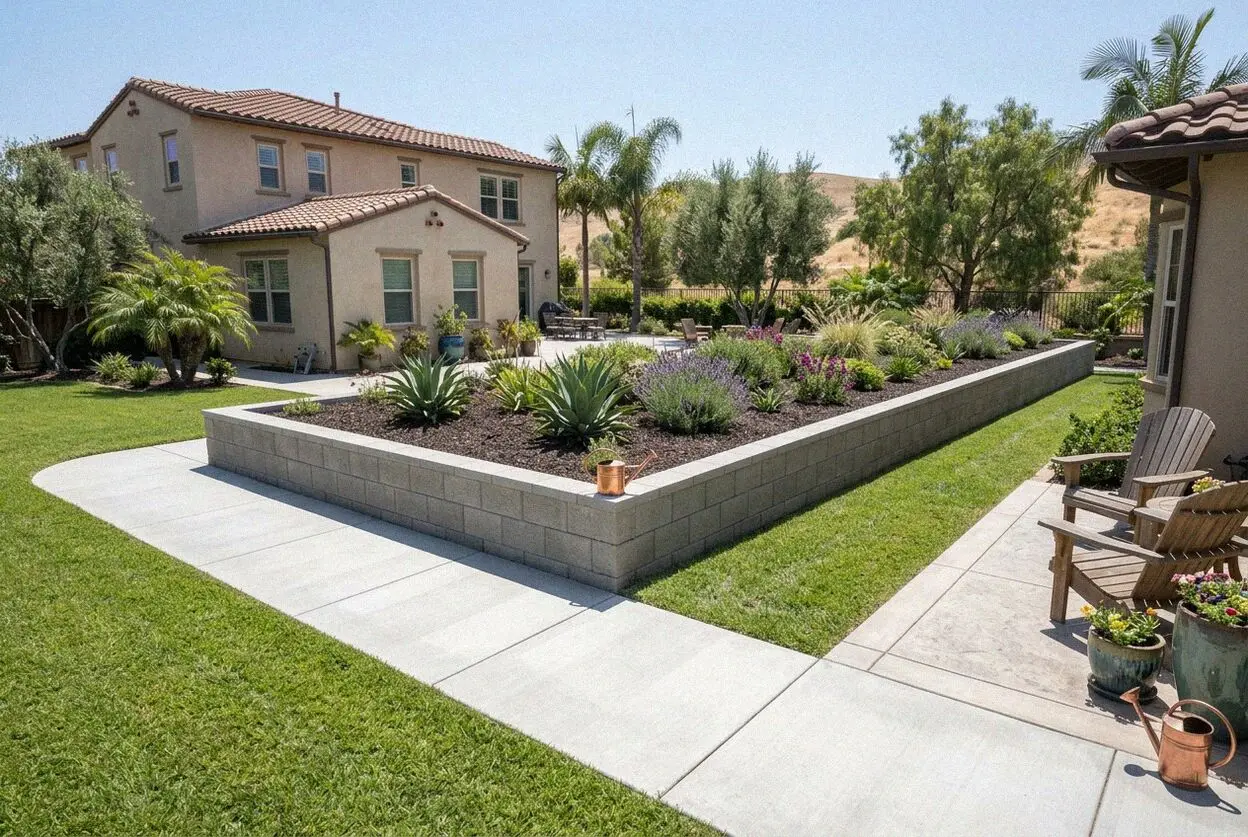
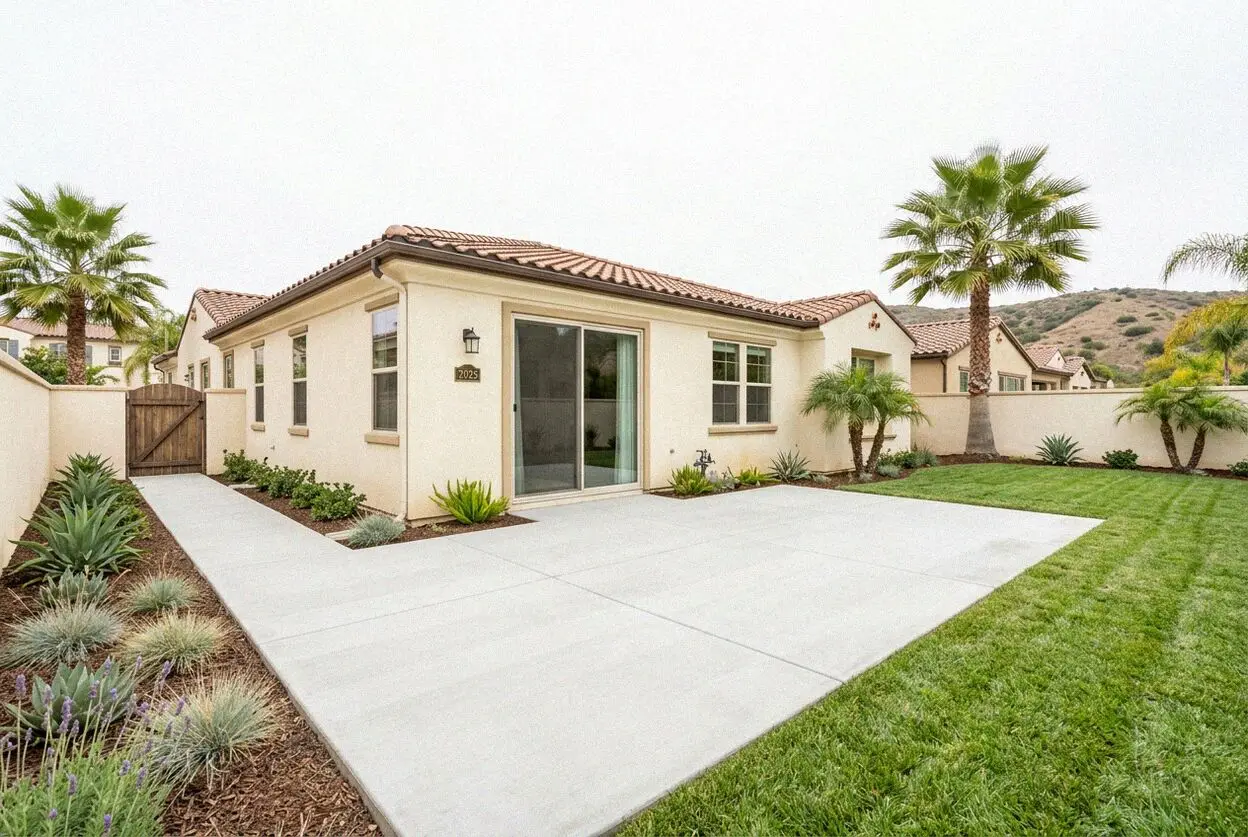
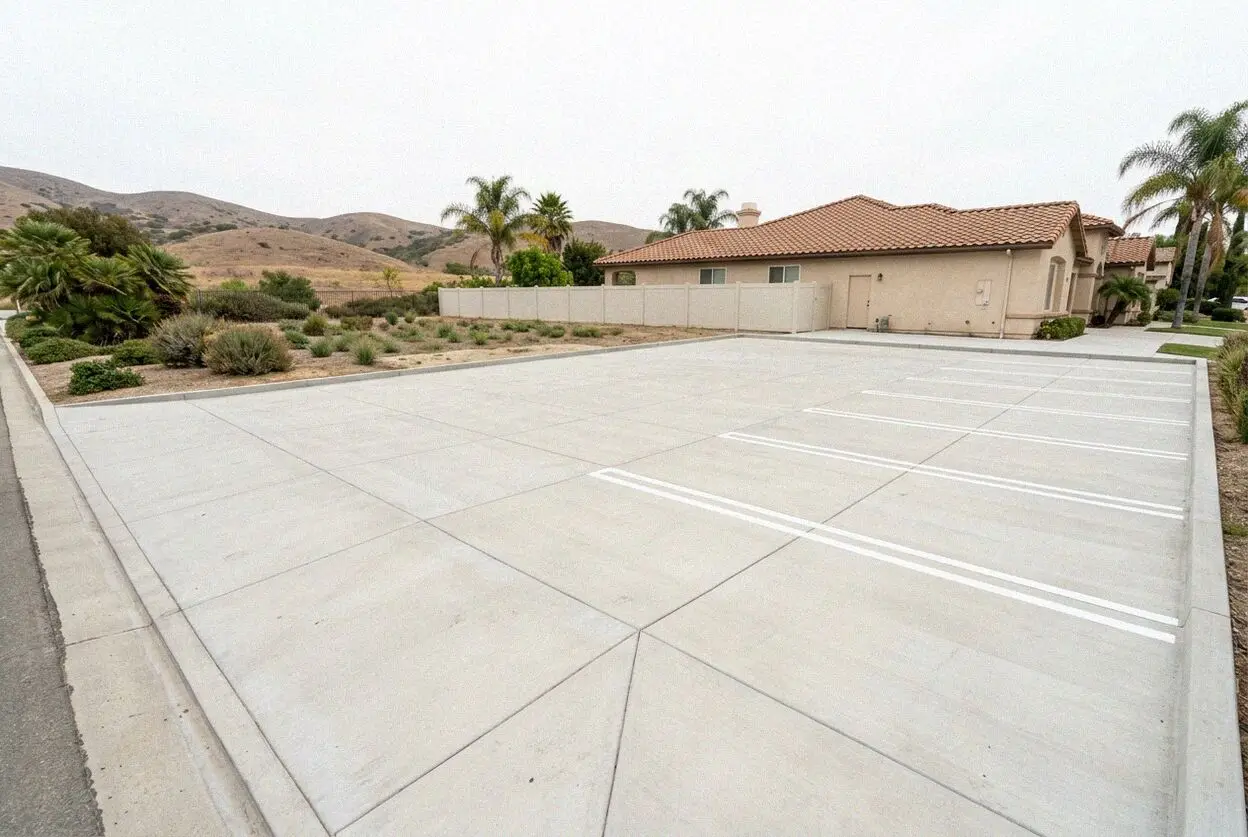
Six jobs off streets you already drive - a drive in Woodbridge, a pool deck in Turtle Rock, a wall on a Portola Springs slope. Any of them is a short detour if you want to see the finish before you decide.
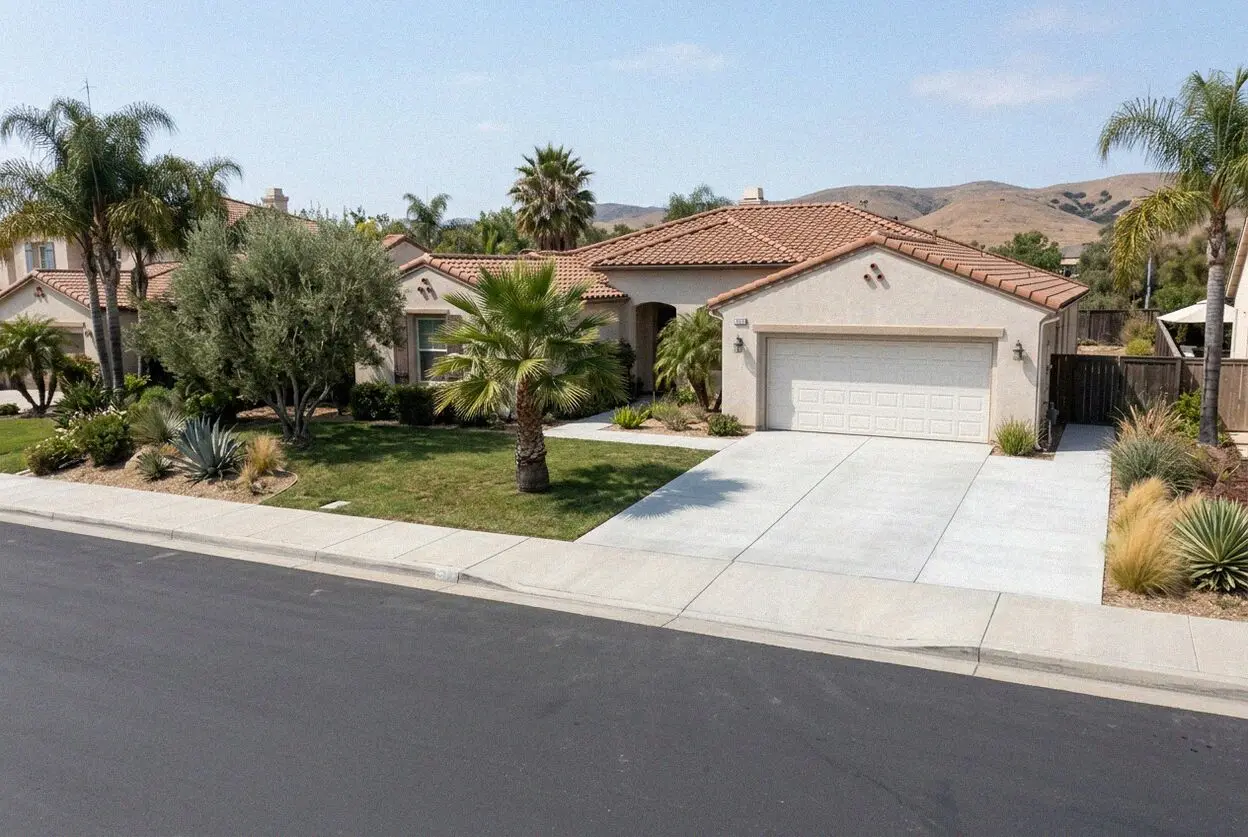
540 sq ft at 4 in - clay moisture-conditioned
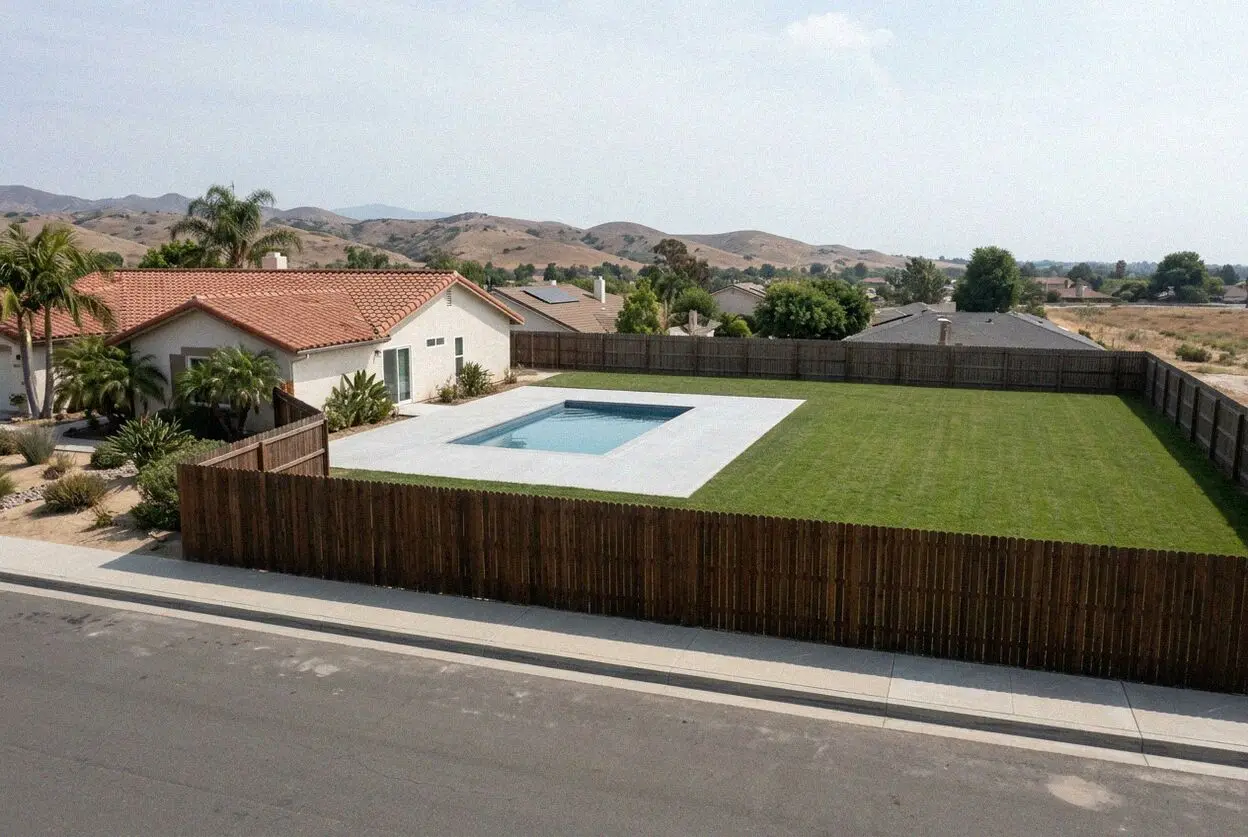
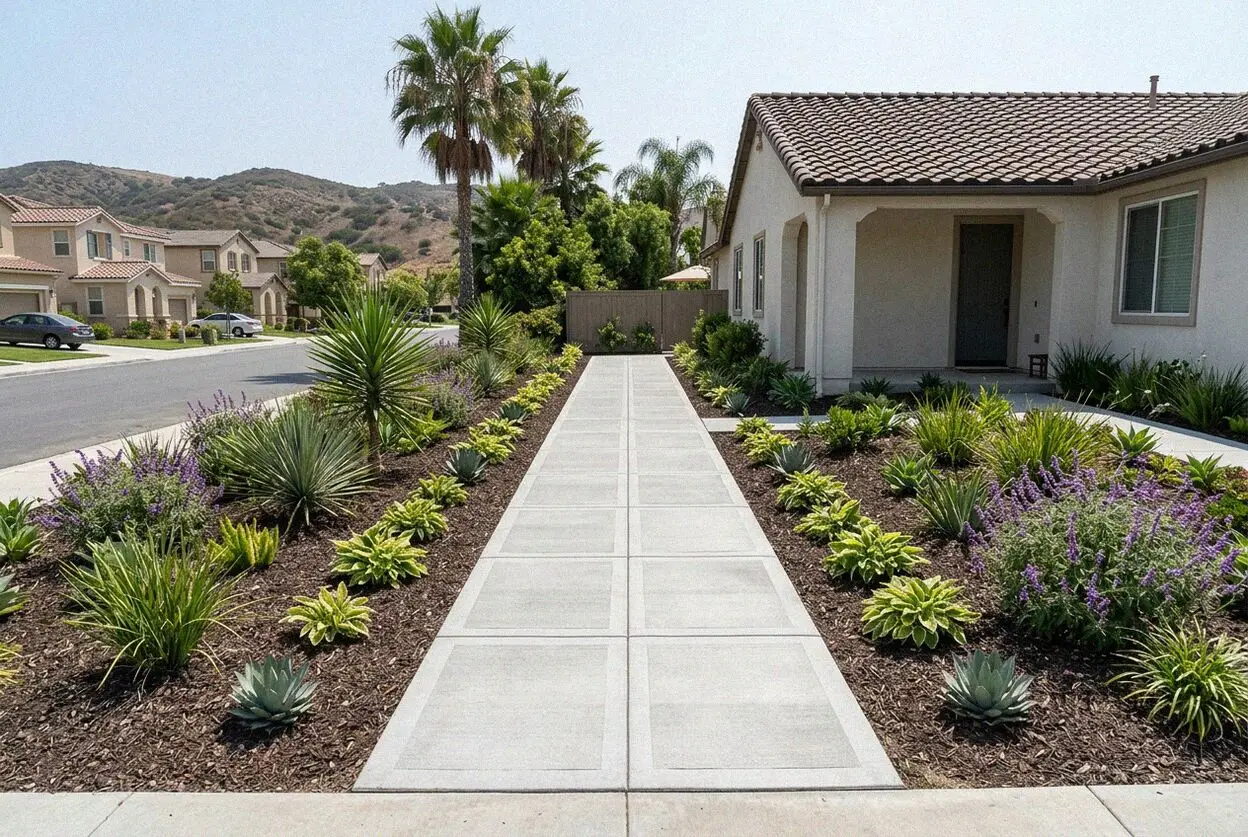
72 linear ft - encroachment permit pulled

Nathan Pham gave 15 years to other outfits before starting Barranca Irvine Concrete in 2020 - village drives through Northwood and Westpark, pool surrounds along the San Joaquin Hills edge, tilt-up floors on the industrial blocks off Barranca Parkway. The C-8 is held in his name. He lives in Irvine, does every measure himself, and is on the deck when the trucks come.
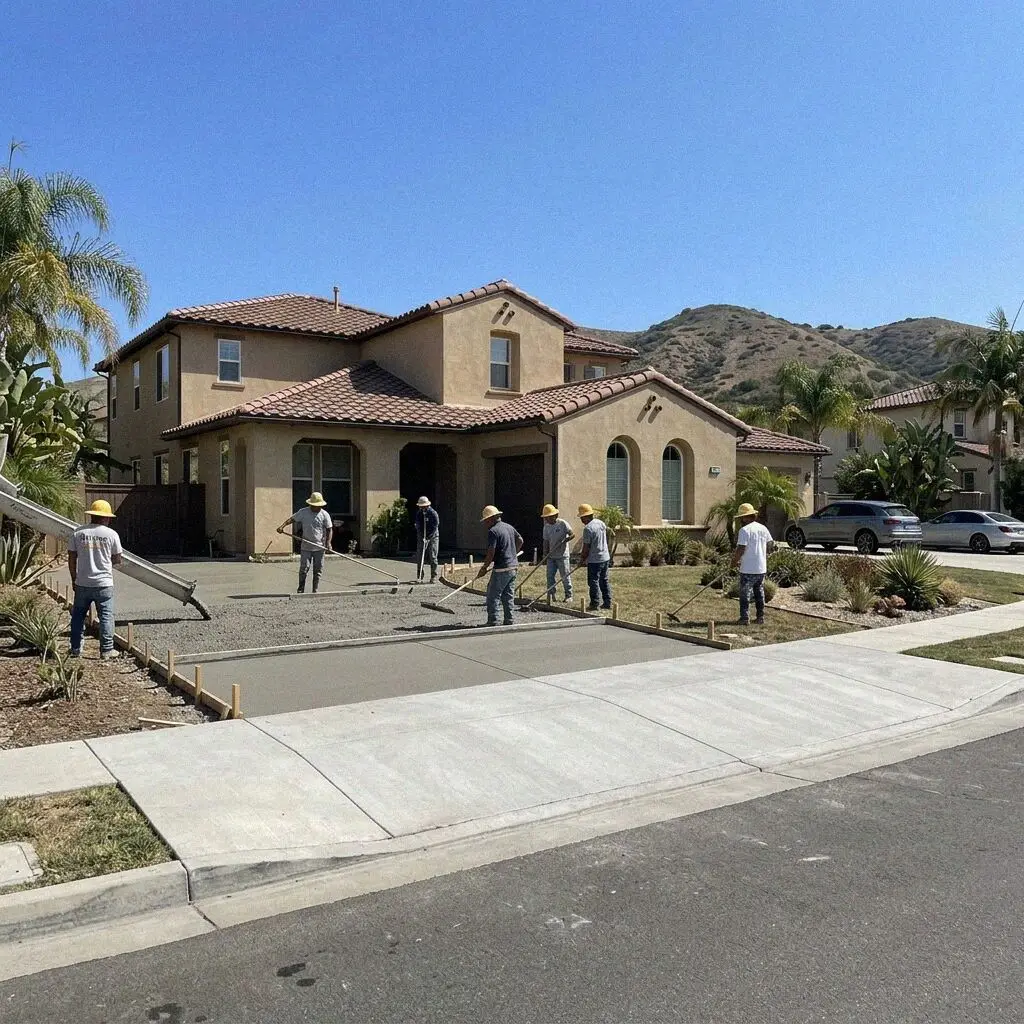
On the Ground
A city drawn as villages before it was built, ground that swells with the rain, and a written approval to get before some pours: all three land on the estimate.
Irvine has been a city since 28 December 1971, and it was laid out village by village on ranch land rather than grown out from an old downtown. That is why the concrete argument here is not age alone. A slab may be sound and still be wrong, because the color or the texture no longer matches what the village approved for that street.
Under the villages is farm clay. The flats through Woodbridge and the Civic Center are mapped as Omni and Chino clays, drained for row crops long before the tracts went in, and they carry a high shrink-swell rating - the ground gains volume through a wet winter and gives it back by August. Where the villages climb into the San Joaquin Hills at Turtle Rock and Portola Springs, that becomes Anaheim clay loam, often shallow to weathered rock, and the dig turns from digging to breaking.
Everything poured here drains to the Newport Bay watershed through San Diego Creek, the flood control channel that runs the length of the city, so washout and slurry stay off the street and go in a pit on your lot. A drive or walk inside the lot line and under 30 inches is exempt; a patio slab is not named, the approach and the public walk take a Right of Way and Encroachment Permit through Public Works, and a wall over 4 feet goes to Building and Safety at 1 Civic Center Plaza.
What settles it here is clay that swells and shrinks with the season, and an association that has an opinion about the finish. A slab holds one plane across moving ground and comes in a color you can get approved on paper.
| Option | Lifespan | Back in use | Upkeep | On Irvine clay and under review |
|---|---|---|---|---|
| Poured concrete | 30-40 years | Walk at 24-48 hrs; drive on at 7 days | Reseal every 2-3 years | One plane over swelling clay; color easy to submit |
| Interlocking pavers | 25-50 years on a built base | Walk on it the same day | Re-sand joints every 1-2 years | Rides clay movement, but blends need approval |
| Asphalt paving | 15-20 years | Cars back on in 2-3 days | Sealcoat every 2-3 years | Rarely permitted on a village frontage |
Pavers are the easiest to have refused on color and the most work to keep flat. Asphalt is rarely allowed on a village frontage at all.
Because it swells when wet and shrinks when dry, and a slab laid on it rides that movement. The ranch flats through Woodbridge and the Civic Center are mapped as Omni and Chino clays rated high shrink-swell, so we wet the subgrade to an even moisture and roll it before base.
Where the governing documents say so, yes, and state law shapes how. Civil Code section 4765 requires a fair and expeditious procedure, a written decision, reconsideration by the board if it is refused, and an annual notice listing what needs approval. We work to that timetable.
No, and it changes the dig. The flats are clay; the slopes above Turtle Rock and Portola Springs are Anaheim clay loam over weathered rock, often inside 26 inches; the Northwood side runs to Mocho and Sorrento loams. Your own parcel is mapped on the USDA Web Soil Survey.
The joint layout does. Curing concrete loses volume and must relieve it somewhere, so grooves go in at 2 to 3 feet per inch of slab depth and the crack runs down one. On ground that swells with the seasons the grid tightens further, since clay moves more in a year than a slab does.
Inside the lot line, mostly not: the Residential Code exempts drives and walks, never a patio slab. Cross onto the approach, the parkway or the public walk and it is right-of-way work under an encroachment permit. A wall over 4 feet with its footing takes a building permit too.
Load decides it, not preference. People and cars are fine on 4 inches, while a truck, a boat trailer or a workshop needs 5 to 6. Depth is the line nothing corrects later - short by an inch and the slab breaks under nothing unusual within a few years. What we pour to is on your sheet.
Submittals, clay subgrade, joint lines, permits, sealing, timing and the limits of the guarantee - answered for a city that was drawn on paper before it was ever built.
Nothing honest can be quoted from a description. Depth is the biggest single lever, because going from four inches to five adds a quarter again to the concrete and to the rock beneath. After that comes the volume of old slab leaving the site, what the clay needs doing to it, and which finish your village will accept. All of it is measured free and written down.
Three things: area, the depth poured, and what turns up once the old slab is off. A Woodbridge frontage sits on drained ranch clay that has to be wetted and rolled first. A Turtle Rock drive on a grade can meet weathered rock within two feet. Those two dig days are the difference you see on the sheet.
By area, by access and by the finish the association has agreed to. Access moves it most: a side gate a buggy fits through is one job, a yard reached only through the house is barrow work, which is hours rather than material. A color and texture submittal adds a sample panel and the wait for the written decision.
Cars sit happily on 4 inches. A truck, a boat trailer or an RV wants 5 to 6. Nothing recovers depth once the mixers have gone, which makes it the one line on an estimate worth arguing over: short by an inch and the slab breaks under nothing worse than daily use. The figure we pour to is printed before you sign.
Because a slab only ever holds what is beneath it, and failures start under the concrete rather than in it. On ranch clay that means bringing the whole subgrade to one moisture and compacting it, then angular base over the top in lifts. Pour on dry clay in October and the ground under you gains volume by February.
They decide where the crack goes. A slab loses volume as it hardens and has to relieve that somewhere; grooves at 2 to 3 feet per inch of depth hand it a straight line rather than letting it wander. Seasonal clay gets a tighter grid again, since the ground below moves further in a year than the concrete above.
It can, and the direction depends on where you stand. Down on the ranch flats the clays take water through winter and give it up by late summer, which lifts a slab at its edges. Climb into the San Joaquin Hills and the soil thins over rock, so cut and fill is the problem instead. Your parcel is mapped on the USDA Web Soil Survey.
Nearly all of them, because the coast takes the heat out of summer here. The 1991-2020 normals at John Wayne Airport put July at 78.9 and August at 80.4 degrees. What governs the diary instead is the marine layer: a damp slab sets slowly, so crews start once it burns off and hold the surface wet through the 7-day cure the American Cement Association sets out.
Yes, and around a pool sooner than the tin suggests. Bare concrete is porous, so chlorinated splash-out, sunscreen and leaf tannin sink in and the mark stays. Sealing also slows how fast water reaches the clay under the edge of the slab. Reseal every 2 to 3 years, and sooner on a deck that is swum off daily.
Three to five working days for an ordinary residential job, and the cure runs on after they leave. The association submittal is not inside that figure - it has its own clock and happens before a date is booked at all. You get foot traffic back at 24 to 48 hours, cars at seven days, anything heavy at 28.
Usually not, if it stays inside the lot line - the California Residential Code exempts drives and walks under 30 inches above grade. It never names a patio slab, so that one we put to the counter. Anything touching the approach, the parkway or the public walk needs a Right of Way and Encroachment Permit from Public Works. Walls over 4 feet, and slabs carrying a structure, go to Building and Safety.
The job carries a written workmanship guarantee against defects in how it was built, and the limits print on the estimate you sign next to subgrade, depth, joint layout and finish. Marks, ordinary wear and clay heaving beyond what the joint plan was drawn to absorb are excluded, and that exclusion sits in the same paragraph rather than somewhere you have to ask for.
Service Area
The twelve closest, with straight-line miles from Irvine beside each. All 20 towns on the list are in Orange County, inside 25 miles, so call even if yours is not shown.
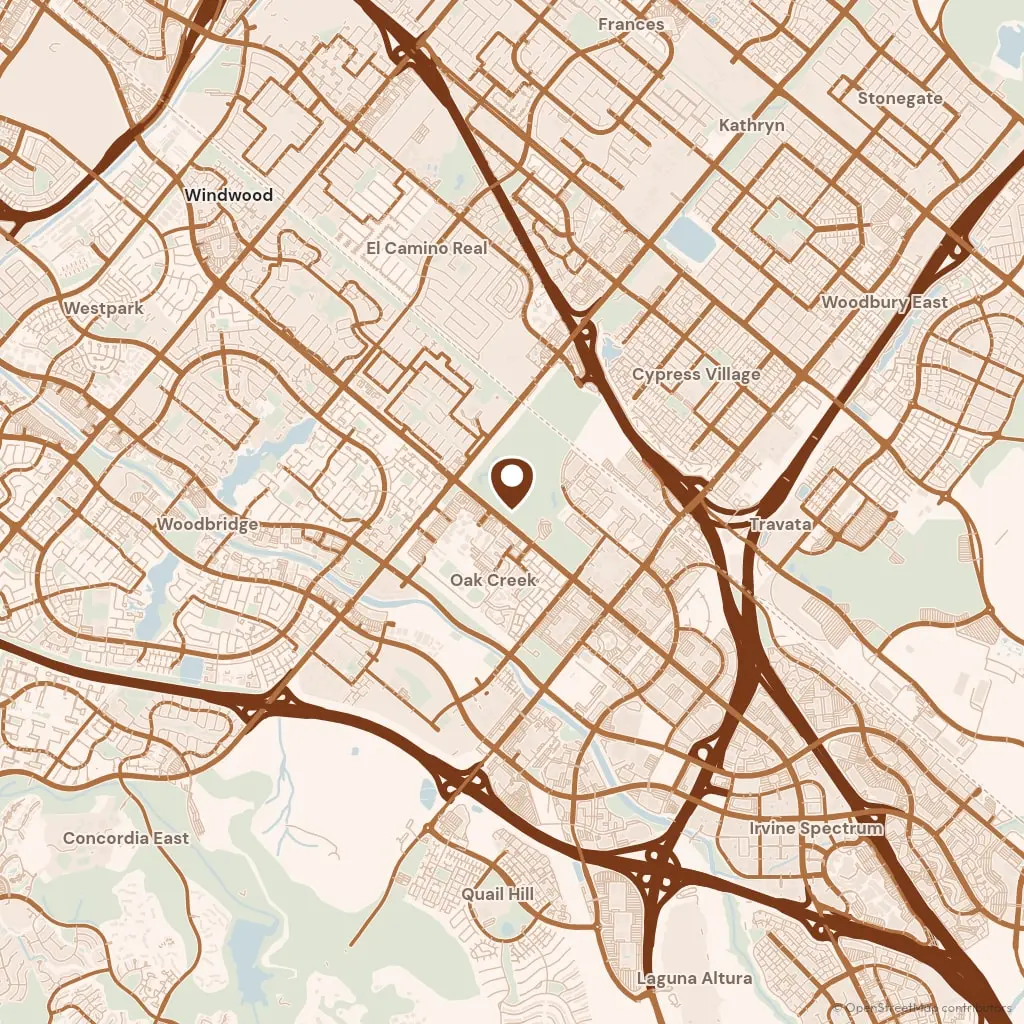 Open the Irvine Office in Google Maps
 Phone or send the form and the reply comes within 1 business day. Nathan Pham drives out himself, measures the work, opens the subgrade to see what is under it and writes the number on the spot. Nothing here is priced off a photograph.