Backyard ground across central Orange County contains dense clay that expands significantly when wet and shrinks during hot, dry weather. According to the USDA Web Soil Survey, local soil profiles hold high concentrations of expansive clay that exert intense upward pressure on flatwork. When a patio is poured directly on this native soil without adequate subbase prep, seasonal ground movement creates uneven heave, pooling water, and wide surface fractures.
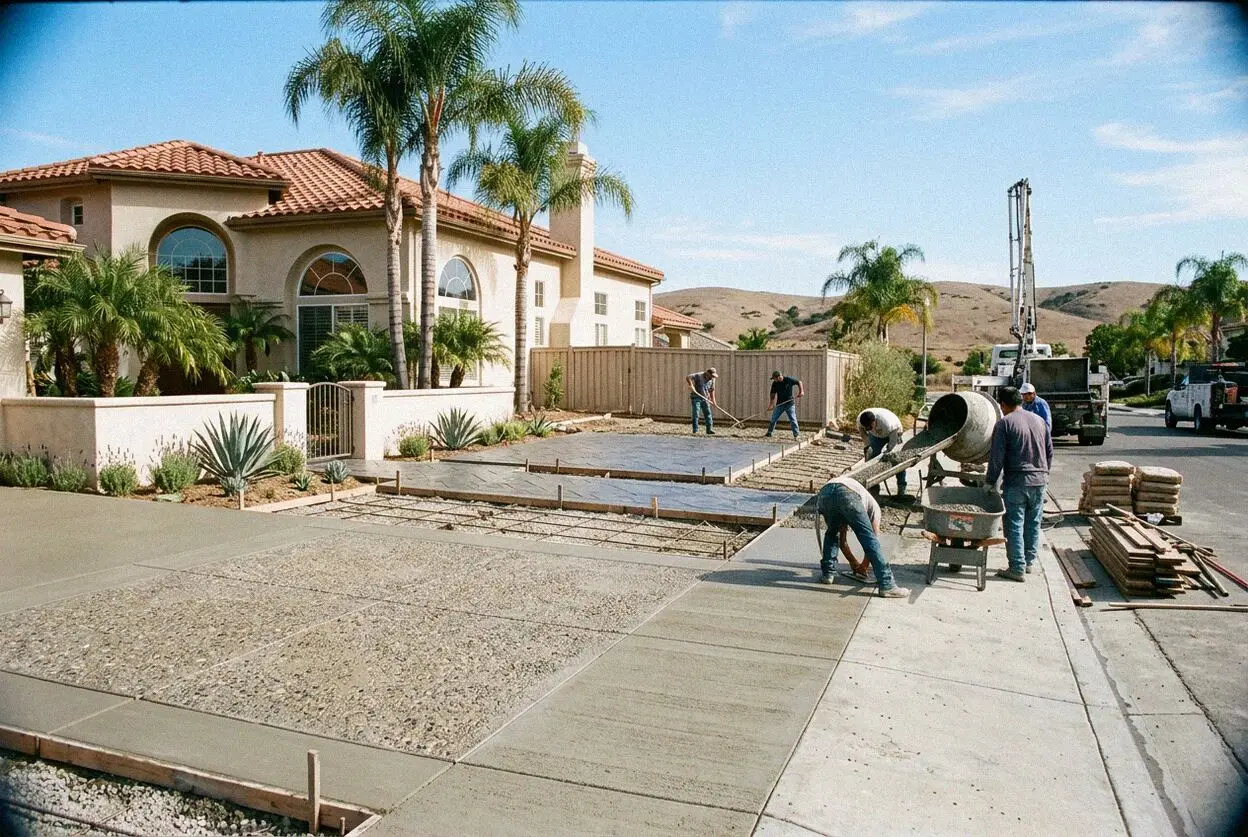
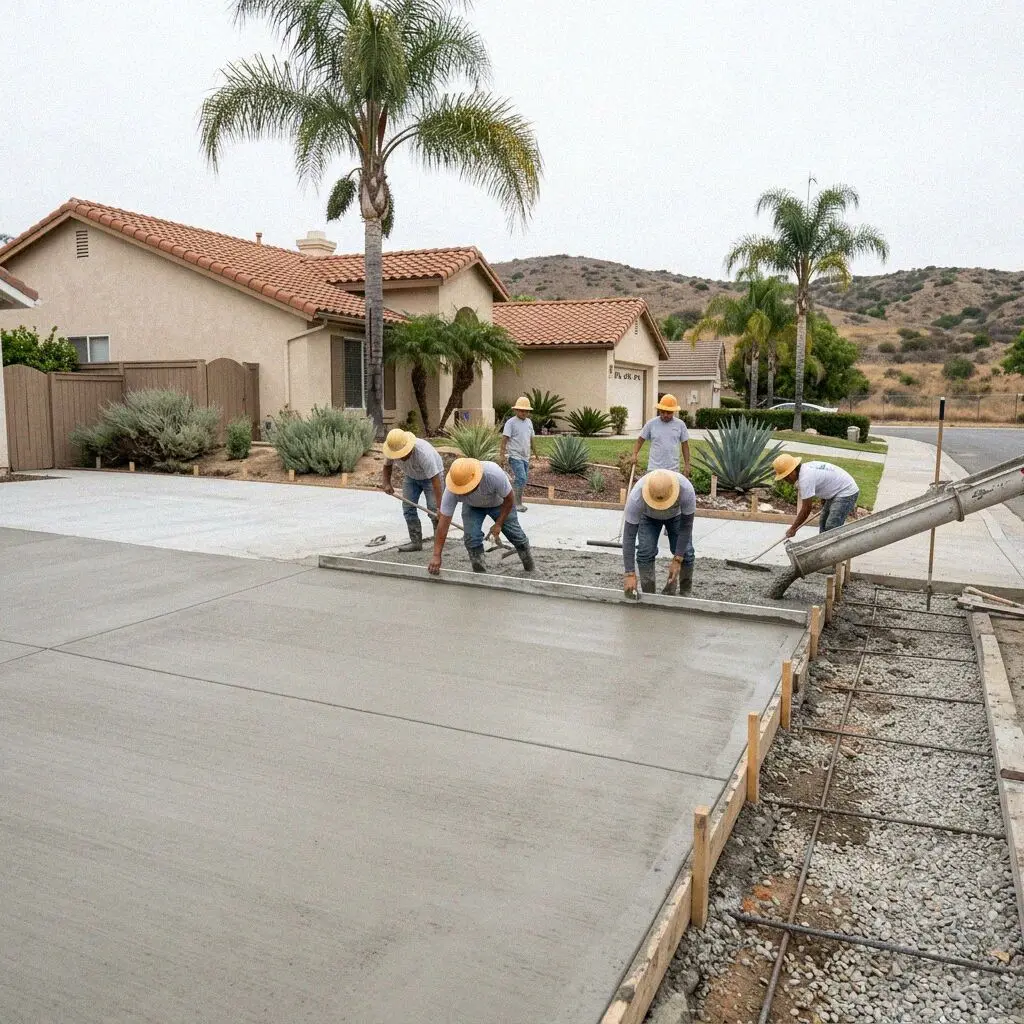
To isolate the slab from shifting earth, every installation begins by excavating native soil to a depth of eight inches below finished grade. We import four inches of crushed aggregate base rock, distributing it across the entire footprint and compacting it with mechanical plate tampers to achieve ninety-five percent relative density. This stable gravel layer drains trapped moisture, buffers soil swelling, and prevents moisture from accumulating under the slab.
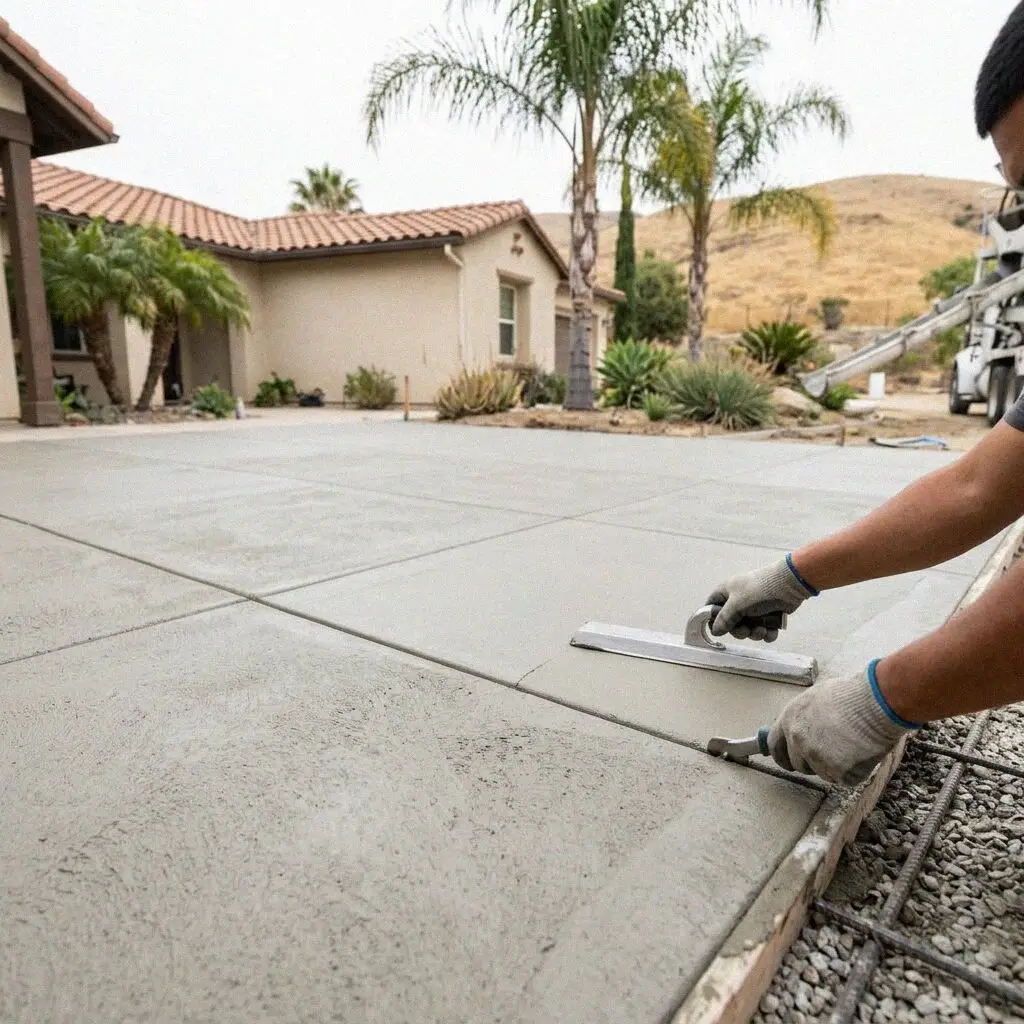
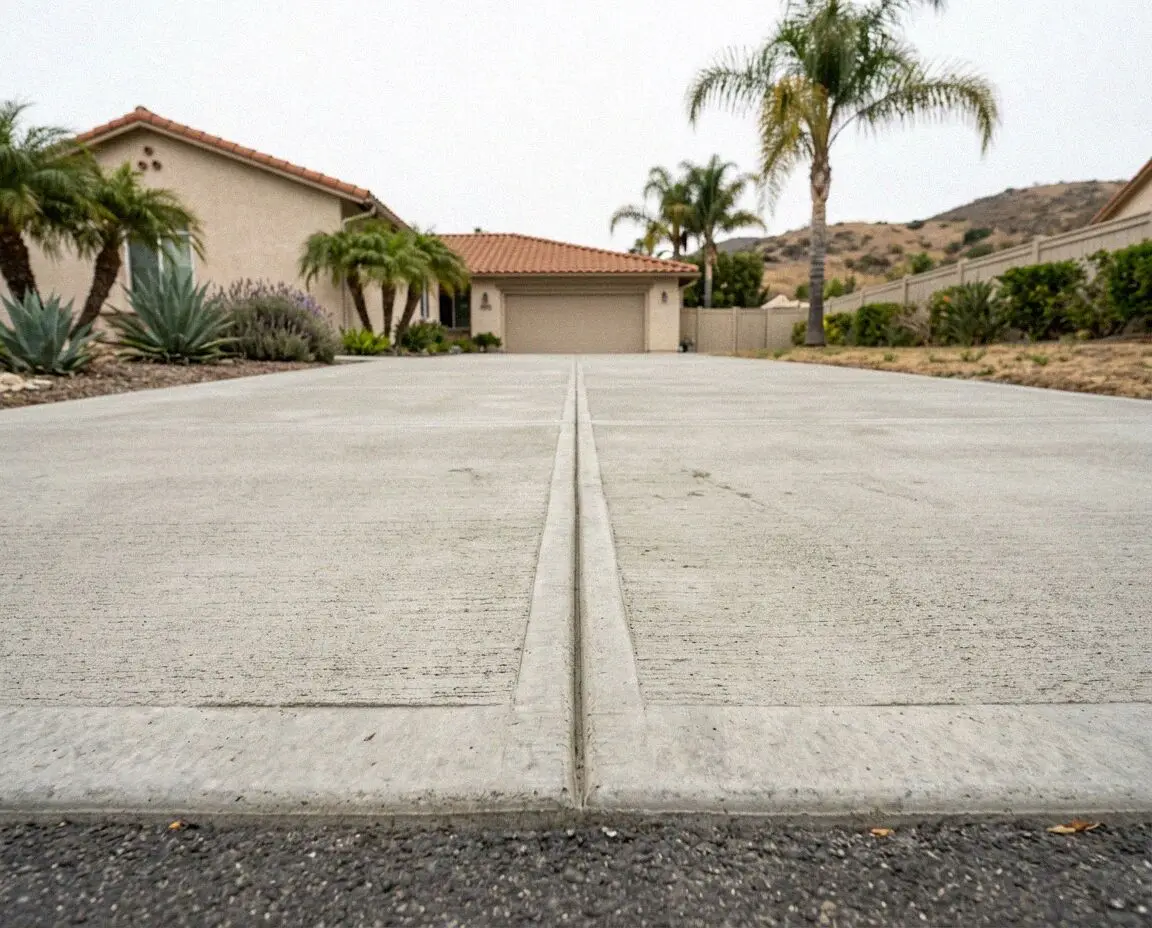
On top of the aggregate base, we place steel rebar reinforcement in a grid supported on concrete chairs to keep the steel centered inside the four-inch concrete pour. We place flexible expansion joint material along all adjacent house foundations and stucco walls to isolate structural movement. Pouring a 4,000 PSI mix delivers compressive strength that easily withstands heavy patio furniture, foot traffic, and seasonal changes across the lot.